Custom Orthotics &
Arch Support.
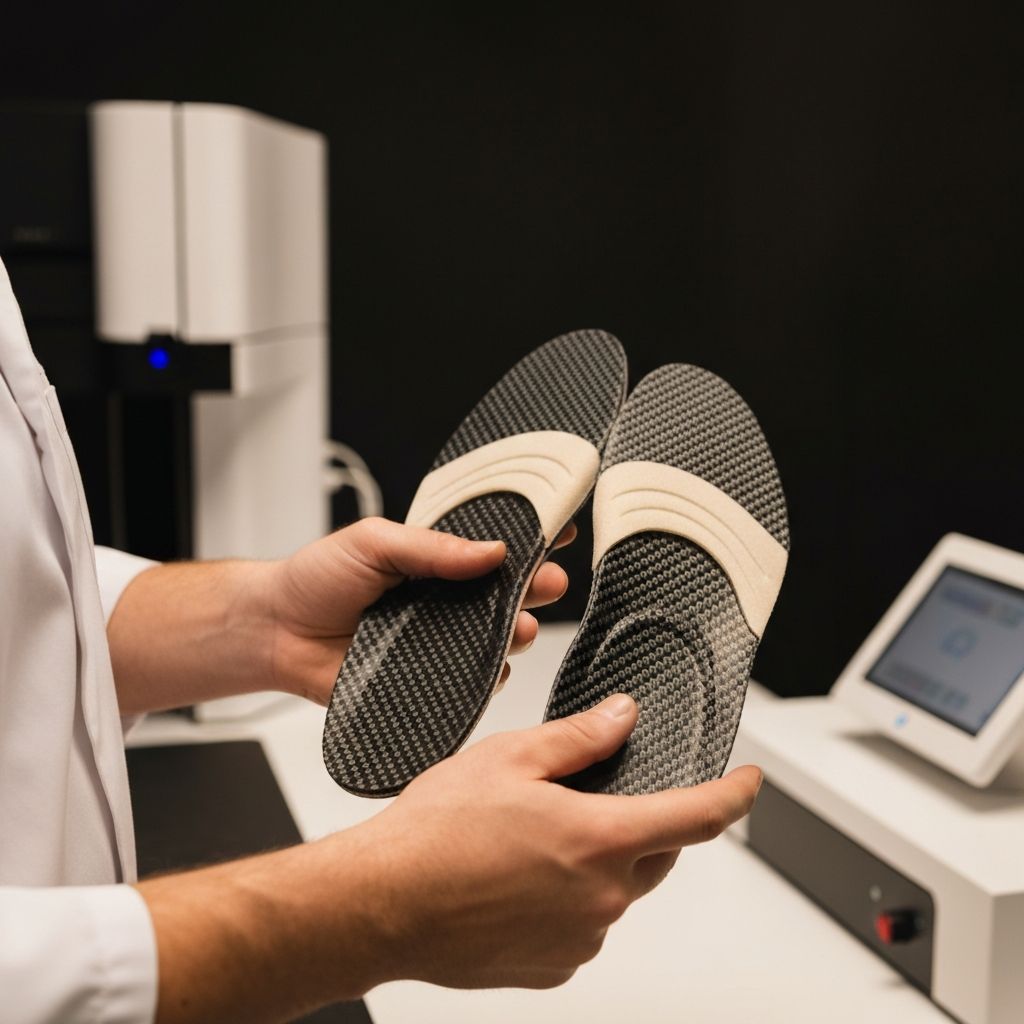
Custom orthotics are prescription medical devices — precisely manufactured insoles designed to control overpronation, redistribute pressure and improve lower limb biomechanics.
Unlike generic shop-bought insoles, our custom orthotics are prescribed based on comprehensive gait analysis and 3D foot scanning — treating the root cause of plantar fasciitis, flat feet, heel pain, knee pain and sports injuries.
Common searches: custom orthotics near me, best insoles for flat feet, how to fix overpronation, orthotic prescription podiatrist, 3D printed orthotics, arch support insoles, plantar fasciitis orthotics, heel pain insoles, biomechanical orthotics Nottingham
Why Custom Orthotics?
Custom orthotics are biomechanically prescribed medical devices — not generic insoles. Here's what makes them effective.
Precision 3D foot scanning
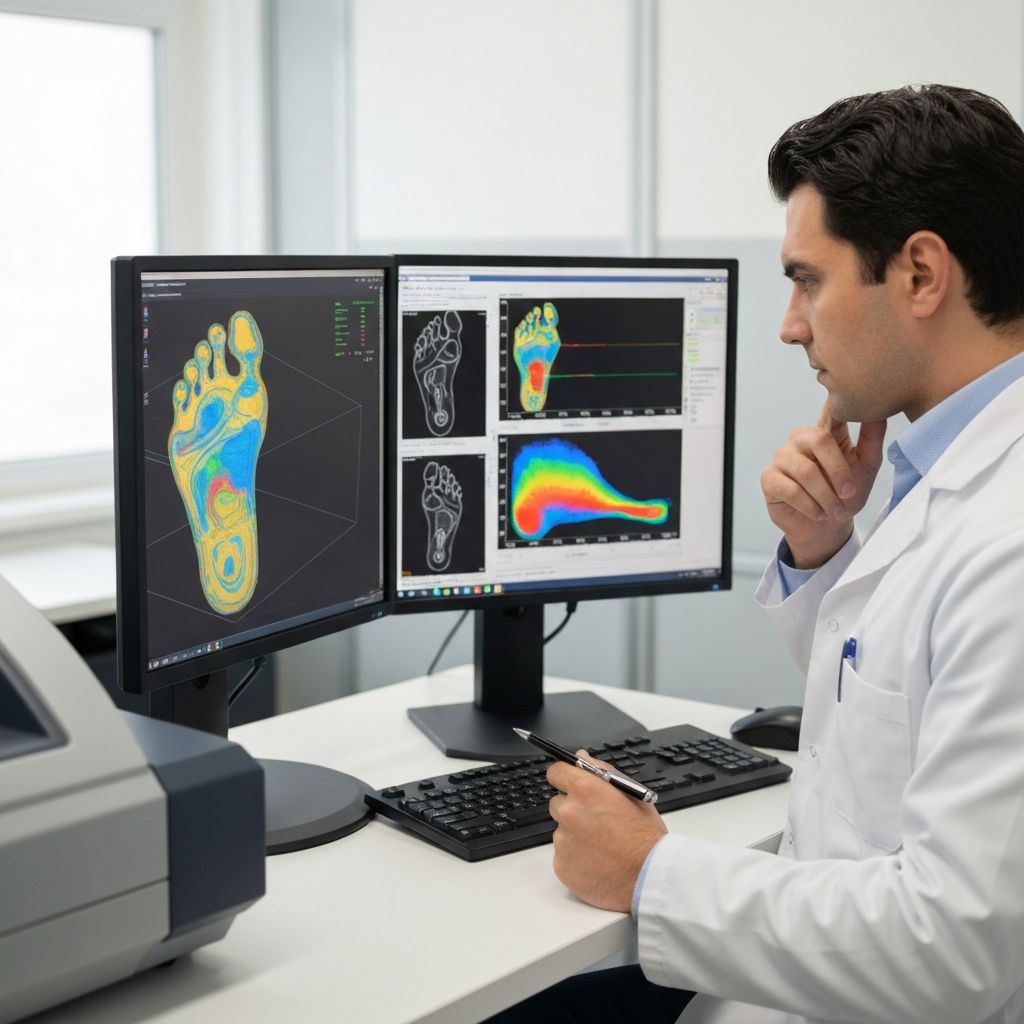
We use advanced 3D scanning or foam casting to capture the exact shape, contours and biomechanics of your feet — ensuring your orthotics fit perfectly.
Biomechanically prescribed, not guessed
Your orthotics are prescribed based on comprehensive gait analysis, pressure mapping, joint range testing and diagnosis — not trial and error or generic templates.
Medical-grade materials
We use high-quality EVA, carbon fiber, polypropylene and cork depending on your activity level, weight, footwear and biomechanical needs.
Control overpronation & supination
Custom orthotics control excessive inward rolling (overpronation) or outward rolling (supination) — the root cause of most foot, ankle, knee and hip pain.
Redistribute pressure & reduce pain
Orthotics offload high-pressure areas (heel, forefoot, metatarsals) and redistribute load evenly across your foot — reducing pain from plantar fasciitis, metatarsalgia and neuromas.
Improve lower limb alignment
By controlling foot position, orthotics improve ankle, knee and hip alignment — reducing compensatory stress and preventing injuries up the kinetic chain.
Enhance athletic performance
Sports orthotics optimise foot function, improve energy return, reduce fatigue and enhance power transfer — helping you run faster, jump higher and move better.
Durable & long-lasting
Custom orthotics typically last 2–5 years with normal use — far longer than over-the-counter insoles which break down in months.
Custom Orthotic Prescription Process
We don't guess. Every orthotic prescription is based on comprehensive biomechanical assessment and precision 3D foot scanning.
Comprehensive Biomechanical Assessment
We start with a full gait analysis, pressure mapping, joint range testing, muscle strength assessment and posture evaluation. This identifies the biomechanical issues causing your pain.
Gait & pressure analysis3D Foot Scanning or Foam Casting
We capture the exact 3D shape of your feet using either advanced 3D scanning technology or traditional foam impression casting. This ensures your orthotics fit perfectly.
Precision foot captureDiagnosis & Orthotic Prescription
Based on your assessment findings, we diagnose the root cause of your pain and prescribe custom orthotics with specific corrections — arch height, heel posting, forefoot wedging, metatarsal pads, cut-outs or accommodations.
Evidence-based prescriptionMaterial & Design Selection
We select the optimal materials for your needs — rigid polypropylene for severe overpronation, semi-rigid EVA for everyday use, carbon fiber for sports, or soft accommodative orthotics for diabetic or sensitive feet.
Tailored to your activityFootwear Assessment & Compatibility
We assess your shoes to ensure they're compatible with orthotics — adequate depth, removable insoles, heel counter stability. We recommend footwear changes if needed.
Footwear compatibility checkOrthotic Manufacture (2–3 Weeks)
Your orthotics are manufactured in a specialist orthotic laboratory to your exact prescription. Manufacturing typically takes 2–3 weeks.
Lab fabricationFitting, Adjustment & Break-In Guidance
When your orthotics arrive, we fit them in your shoes, check alignment, make any necessary adjustments and guide you through the break-in process (gradual wear over 1–2 weeks).
Professional fittingFollow-Up & Refinement
After 4–6 weeks of wear, we reassess your pain, gait and orthotic fit. If needed, we make adjustments to posting, arch height or cushioning to optimise results.
Ongoing supportYour Custom Orthotic Treatment Plan
Orthotics work best when combined with exercise, footwear advice and biomechanical coaching. Here's your complete treatment pathway.
Custom Orthotic Prescription & Fitting
Your custom orthotics are prescribed based on biomechanical assessment, fitted professionally and adjusted for optimal comfort and function.
Gradual Break-In Protocol
We guide you through a gradual break-in process — starting with 1–2 hours per day and increasing wear time over 1–2 weeks to allow your feet, muscles and joints to adapt.
Footwear Prescription & Advice
We recommend the best shoes for your foot type, orthotics and activity — ensuring your footwear works synergistically with your orthotics.
Strengthening & Stretching Programme
Orthotics work best when combined with targeted exercises to strengthen foot intrinsics, calves, glutes and hip stabilisers — improving long-term biomechanics.
Gait Retraining (If Needed)
For runners or athletes, we combine orthotics with gait retraining — improving foot strike, cadence, posture and running mechanics.
Pain Management During Adaptation
If you experience temporary discomfort during the break-in period (normal), we provide strategies to manage it — ice, stretching, reduced wear time or minor orthotic adjustments.
Follow-Up Assessment & Adjustment
After 4–6 weeks of wear, we reassess your pain, gait and orthotic performance. We make adjustments if needed to ensure optimal results.
Why Choose General Foot Care for Custom Orthotics?
HCPC registered podiatrists — your orthotics are prescribed by qualified, experienced podiatrists, not sales staff or technicians.
Advanced 3D scanning & gait analysis — we use cutting-edge technology to capture your exact foot shape and biomechanics.
Evidence-based prescription — your orthotics are prescribed based on biomechanical assessment and clinical diagnosis, not guesswork.
Medical-grade materials — we use high-quality EVA, polypropylene, carbon fiber and cork — not cheap foam.
Expert fitting & follow-up — we fit your orthotics professionally, make adjustments as needed and provide ongoing support.
Leading UK clinic for biomechanics — recognised nationally for our expertise in gait analysis, orthotics and lower limb biomechanics.
Serving Nottinghamshire: Arnold, Gedling, Carlton, Mapperley, Woodthorpe, Ravenshead, Hucknall, Daybrook, Bestwood, Calverton, Lambley, Burton Joyce, West Bridgford, Beeston, Bingham, Radcliffe-on-Trent, Mansfield, Newark, Retford, Worksop and surrounding areas.
FAQs
Frequently Asked Questions
Custom orthotics are prescription medical devices — moulded insoles designed specifically for your feet and biomechanics. They're prescribed by a podiatrist based on gait analysis, pressure mapping and functional testing, then manufactured in a specialist laboratory to your exact foot shape and biomechanical needs. Unlike over-the-counter insoles, custom orthotics are tailored to your unique foot structure, gait pattern and diagnosis.
Custom orthotics treat: plantar fasciitis (heel and arch pain), flat feet and overpronation, heel spurs and heel pain, metatarsalgia (ball of foot pain), Morton's neuroma, Achilles tendinopathy, knee pain (patellofemoral pain, ITB syndrome), shin splints, ankle instability, bunions and hallux valgus, arthritis in the foot or ankle, diabetes-related foot problems, and sports injuries caused by biomechanical issues.
Custom orthotics are prescribed based on biomechanical assessment and manufactured to your exact foot shape and needs. Shop-bought insoles are generic, mass-produced and not tailored to your biomechanics. Custom orthotics use medical-grade materials, last 2–5 years, control specific biomechanical faults (overpronation, supination) and are clinically proven to treat foot and lower limb pain. Over-the-counter insoles offer basic cushioning but don't address the root cause of pain.
Custom orthotics typically last 2–5 years depending on your activity level, weight, footwear and how often you wear them. Athletes and runners may need replacement sooner (18–24 months) due to higher wear. We recommend annual reviews to check orthotic condition and function. The top cover (fabric layer) may wear out before the shell — we can replace top covers to extend orthotic life.
Custom orthotics control and support flat feet and overpronation — they don't 'cure' or permanently change your foot structure, but they prevent the pain and injuries caused by excessive pronation. When you wear orthotics, your feet are held in a more neutral, biomechanically efficient position — reducing stress on your plantar fascia, Achilles, knees and hips. If you stop wearing orthotics, your feet will return to their natural position.
Not necessarily. Some patients wear orthotics long-term (especially if they have severe overpronation, flat feet, arthritis or recurring injuries). Others wear them temporarily while they strengthen their feet, improve their gait and resolve acute pain — then transition to supportive footwear or minimalist orthotics. Your podiatrist will advise based on your biomechanics and goals.
Most people adapt to orthotics within 1–2 weeks. We recommend a gradual break-in — starting with 1–2 hours per day and increasing wear time by 1 hour every few days. Some temporary discomfort (arch ache, calf tightness, mild heel soreness) is normal as your feet, muscles and joints adapt to the new alignment. If pain persists beyond 2 weeks, contact us for an adjustment.
You can wear orthotics in most closed-toe shoes — trainers, walking shoes, work boots, casual shoes. Shoes need adequate depth, a removable insole and a stable heel counter. Orthotics won't fit in very tight dress shoes, high heels, ballet flats or sandals. We can prescribe thinner 'dress orthotics' or sport-specific orthotics if needed.
Some patients notice immediate pain relief — especially if their pain is caused by severe overpronation or pressure overload. Others need 2–4 weeks of wear for their muscles, tendons and joints to adapt before they feel significant improvement. Orthotics work best when combined with strengthening, stretching and appropriate footwear.
Almost always both feet. Even if only one foot hurts, both feet usually have the same biomechanical fault (overpronation, flat arches, etc.). Wearing an orthotic in only one shoe creates asymmetry, leg length discrepancy and compensatory stress — often making pain worse. We prescribe orthotics for both feet unless there's a specific clinical reason not to.
Yes. Children with flat feet, in-toeing, toe-walking, growing pains (Sever's disease, Osgood-Schlatter disease), hypermobility or sports injuries often benefit from custom orthotics. Children's feet grow quickly, so orthotics may need replacing every 12–18 months.
Our clinic is in Arnold, Nottingham. We prescribe and fit custom orthotics for patients across Nottinghamshire including Gedling, Carlton, Mapperley, Woodthorpe, Ravenshead, Hucknall, Daybrook, Bestwood, Calverton, Lambley, Burton Joyce, West Bridgford, Beeston, Bingham, Radcliffe-on-Trent, Mansfield, Newark, Retford, Worksop and surrounding areas.
Ready to Walk Without Limits?
Book an appointment at our Arnold, Nottingham clinic today. Same-day appointments often available.