Diabetic Foot
Check & Care.
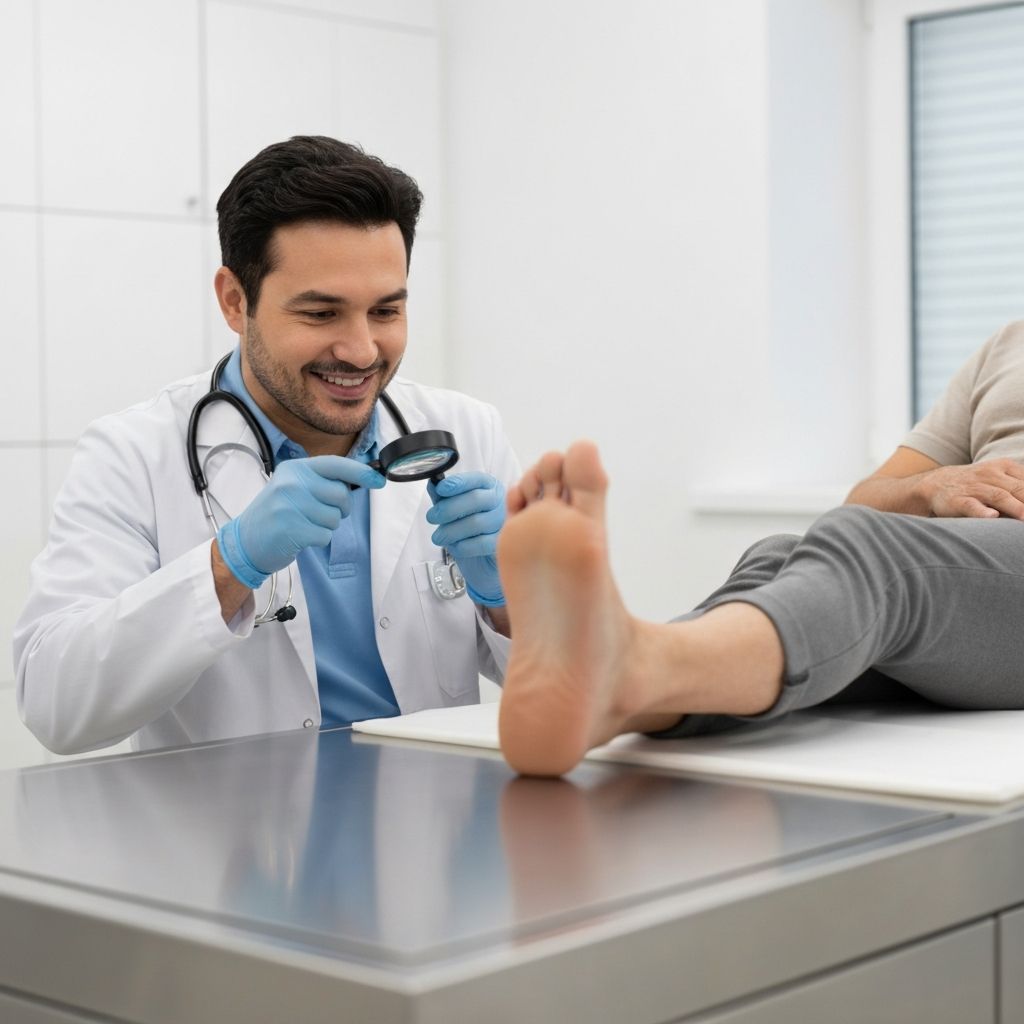
If you live with diabetes, professional foot care is not optional — it is essential. Our specialist diabetic foot check and care service provides comprehensive neurovascular assessment, Doppler testing, nail and skin care, wound management, and an ongoing personalised monitoring plan.
Delivered by HCPC-registered podiatrists with NHS and private experience in diabetic foot programmes — all in a single, thorough appointment at our Arnold, Nottingham clinic.
Important — do not leave diabetic foot concerns untreated
Diabetes can cause nerve damage and poor circulation that means you may not feel a wound, infection or pressure ulcer developing. Early professional assessment is the single most effective way to prevent serious complications. If you have not had a foot check in the past 12 months — or if you have noticed any change in sensation, skin colour, temperature, or have any open wound — please book promptly.
Why Diabetic Foot Care Matters
The risks diabetes poses to your feet
Understanding these risks is the first step. Regular professional monitoring is the second.
Peripheral Neuropathy
Diabetes can damage the nerves in your feet, leading to reduced or absent sensation. You may not feel a cut, blister, or pressure sore — meaning it can worsen undetected until it becomes serious.
Poor Circulation (PAD)
Reduced blood flow caused by peripheral arterial disease slows healing and increases infection risk. Even a small wound can take weeks to heal — or fail to heal at all without intervention.
Foot Ulcers & Wounds
In people with diabetes, foot ulcers can escalate quickly. What starts as a small area of skin breakdown can become a deep wound requiring specialist care if not caught and treated early.
High Pressure Areas
Structural foot changes and bony prominences create areas of concentrated pressure that can break down to form ulcers. Early identification is key to prevention.
Nail & Skin Complications
Thickened nails, fungal infections, corns, and calluses all carry greater risk in diabetic patients. Self-treatment such as DIY nail cutting or corn plasters can cause serious injury.
Charcot Foot & Deformity
Long-standing neuropathy can lead to Charcot neuroarthropathy — a serious structural collapse of the foot. Early detection through regular monitoring significantly reduces this risk.
Your Appointment
What happens during your diabetic foot check?
Every appointment is thorough, unhurried, and structured to give you the most complete picture of your foot health.
Medical History & Diabetes Review
We review your diabetes type, duration, control (HbA1c if known), any previous foot problems, wounds or ulcers, medications, and how you manage your feet at home. This sets the foundation for your individual care plan.
Vascular Assessment (Circulation)
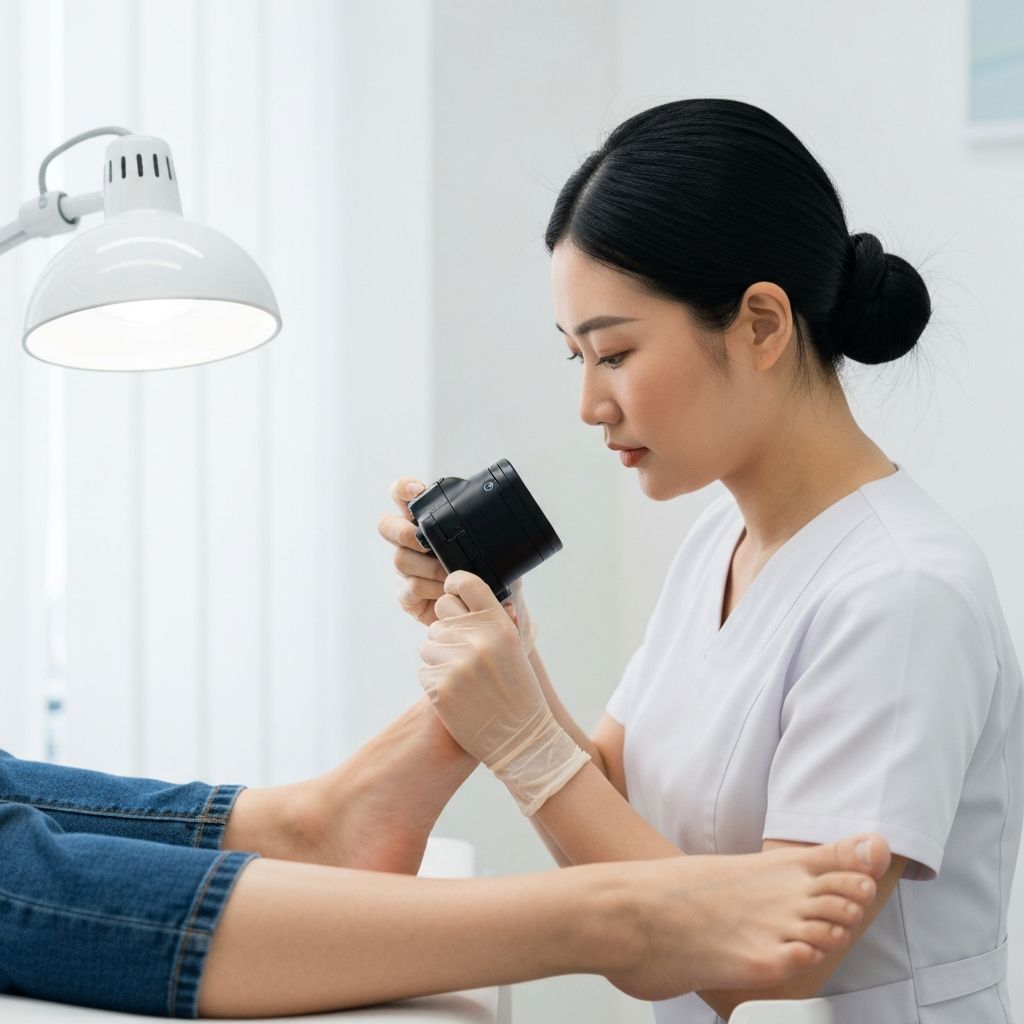
Good blood flow is essential for healing. We carry out a full vascular assessment including pulse check (dorsalis pedis and posterior tibial), capillary refill time, and — crucially — Doppler ultrasound examination. The Doppler allows us to listen to and assess blood flow through your foot arteries, detecting early peripheral arterial disease far more accurately than a visual check alone.
Neurological Assessment (Sensation)
We test sensation in your feet using a 10g Semmes-Weinstein monofilament — the gold-standard test for identifying loss of protective sensation. We also check vibration sense and reflexes as appropriate. This helps us classify your risk level accurately.
Skin & Nail Care
Safe nail trimming, hard skin removal, callus management, and corn treatment — all carried out using sterile medical-grade instruments. For diabetic patients, self-nail cutting and DIY corn treatment carry real risks. We handle all of this safely within the same appointment.
Foot Structure & Pressure Points
We assess for high-pressure areas, bony prominences, foot deformities, and footwear issues that could lead to skin breakdown. Appropriate padding, offloading, or orthotic referral is recommended where needed.
Wound & Ulcer Management
If you already have a wound or ulcer, we provide specialist wound assessment, cleaning, debridement, and dressings as part of the appointment. We monitor progress at each visit and refer promptly to NHS specialist teams if required.
Education & Home Care Advice
We explain the daily foot care routine you should follow at home — what to look for, how to moisturise correctly, what footwear to choose, and when to seek urgent help. We also address whether you should be cutting your own nails (in most cases, our answer is: please let us do it).
Ongoing Monitoring Plan
Our diabetic foot care is not a one-off appointment — it is an ongoing partnership. We create a review schedule based on your individual risk level, ensuring your feet are continuously monitored and problems are caught early.
Why Trust Us
Why choose General Foot Care for diabetic foot check & care?
Your feet are not just another appointment — they are part of a proactive, continuous care plan tailored to you.
- NHS and private experience in diabetic foot programmes
- Doppler ultrasound assessment — more accurate than pulse-only checks
- Gold-standard 10g monofilament neurological testing
- Safe sterile nail and skin care within the same appointment
- Experience managing diabetic foot wounds and ulcers through to healing
- Strong referral pathways to NHS diabetic foot teams when needed
- Continuity model — same podiatrist at every visit
- Clear home care education at every appointment
- Serving patients across all of Nottinghamshire
Related Services
Serving diabetic patients across Nottinghamshire
FAQs
Diabetic Foot Care — Your Questions Answered
It depends on your risk level. If you have peripheral neuropathy, poor circulation, a history of foot ulcers, or active foot changes, we recommend every 3–6 months. For lower-risk diabetic patients with no current complications, annual checks may be sufficient. Your podiatrist will advise the right schedule for you at your first appointment.
Ideally, no — and we strongly advise against it. When circulation or sensation is reduced, even a small nick from nail cutting can lead to an undetected wound, infection, or ulcer. The same applies to a partner cutting your nails. Professional nail care within your diabetic foot check is much safer and gives us the opportunity to check your feet at the same time.
A Doppler assessment is a non-invasive, painless test that uses sound waves to assess blood flow through the arteries in your feet and ankles. We apply a small handheld probe to specific points and listen to the flow sound. It allows us to detect early peripheral arterial disease (PAD) far more accurately than checking pulses alone.
Absolutely — in fact, this is exactly the right appointment for you. We have experience in diabetic wound and ulcer care including assessment, cleaning, debridement, dressings, and ongoing monitoring until healing. If the wound requires onward referral to an NHS specialist team, we will arrange this quickly.
Yes — general foot care (nail trimming, hard skin removal, callus management, corn treatment) is fully integrated into our diabetic foot check appointment. You do not need a separate appointment for routine foot care. This is one of the key benefits of our service.
Peripheral neuropathy is nerve damage caused by sustained high blood sugar levels. In the feet, it reduces or eliminates the ability to feel pain, pressure, heat, or injury. This is dangerous because a cut, blister, or pressure sore can worsen significantly without you knowing. Regular professional checks are essential to catch problems you cannot feel yourself.
The 10g Semmes-Weinstein monofilament test is the gold-standard clinical test for detecting loss of protective sensation in diabetic feet. A thin nylon filament is lightly pressed against various points on the sole of the foot. If you cannot feel the filament, it indicates significant neuropathy and places you in a higher risk category for ulceration.
NHS GP practices are required to offer an annual diabetic foot screening as part of the national diabetes programme. However, this is often a brief check rather than a comprehensive podiatry appointment. For patients who want thorough assessment — including Doppler testing, skin and nail care, wound management, and an ongoing monitoring plan — private podiatry provides far more comprehensive care.
If we identify anything requiring further attention — such as infection, suspected PAD, unhealed wounds, or changes that need specialist review — we act quickly. We have established referral pathways to NHS diabetic foot teams, vascular services, and GPs. You will not be left without a clear next step.
No — we strongly advise against corn plasters (salicylic acid pads) for diabetic patients. These products dissolve healthy skin as well as the corn, and can cause chemical burns, skin breakdown, and serious ulceration in feet with reduced circulation or sensation. Please book a professional appointment instead.
Yes — we operate a continuity model specifically for diabetic patients. Seeing the same podiatrist at every appointment means they know your history, can identify subtle changes in your feet over time, and provide truly personalised, consistent care. This is particularly valuable for patients with complex or ongoing foot conditions.
Yes. We provide mobile podiatry home visits across Nottinghamshire for diabetic patients who are unable to travel to the clinic — including elderly patients, those with mobility limitations, and care home residents. Visit our Home Visits page or call us to arrange.
Our clinic is based in Arnold, Nottingham. We see diabetic patients from across Nottinghamshire including Gedling, Carlton, Mapperley, Woodthorpe, Ravenshead, Hucknall, Daybrook, Bestwood, Calverton, Lambley, Burton Joyce, Lowdham, West Bridgford, Beeston, Bingham, Radcliffe-on-Trent, Mansfield, Newark, Retford, Worksop, Kirkby-in-Ashfield and surrounding areas.
Charcot neuroarthropathy (Charcot foot) is a serious complication of long-standing neuropathy in which the bones of the foot fracture and collapse due to undetected stress. It requires prompt specialist management. Regular podiatry monitoring helps detect the early warning signs — warmth, swelling, redness — before structural damage occurs.
Book Your Diabetic Foot Check Today
Do not wait for a problem to develop. Book a comprehensive diabetic foot check at our Arnold clinic — same-day appointments are available. Call us or book online.