Corn & Callus
Removal.
Painful corns and hard, uncomfortable calluses can make every step miserable. Our HCPC-registered Arnold podiatrists provide safe, painless, same-day corn and callus removal — with instant relief from the very first appointment.
Corns and calluses are areas of thickened skin that build up in response to pressure and friction. While the body creates them as protection, they often end up causing more pain than the pressure they were shielding against. Professional removal by a podiatrist is the safest, fastest, and most effective solution.
Important:
Corn plasters and acid pads dissolve healthy skin as well as the corn — and can cause burns, ulcers, or serious infection, especially if you have diabetes or poor circulation. Cutting corns at home with a blade is equally dangerous. Professional removal by a podiatrist is painless, safe, and far more effective.
Do Any of These Sound Familiar?
Corns and calluses can cause a range of discomforts. If you recognise any of the following, professional podiatry treatment can provide immediate relief.
Sharp or Burning Pain
A corn pressing on a nerve can cause intense sharp, stabbing or burning pain — especially when walking or standing.
Hard, Thick Skin
Visible patches of hard, yellowy or greyish thickened skin on the ball of the foot, heel, or between the toes.
Tenderness Under Pressure
The area feels sore or tender when you press it, or when the weight of your body presses down through it with every step.
Hard Central Core
Corns have a distinct hard central core — often described as feeling like a small stone or pebble is permanently inside your shoe.
Cracked or Rough Heels
Calluses on the heels can crack and split — causing pain, bleeding, and even infection if left untreated.
Discomfort Between Toes
Soft corns form between the toes where moisture softens the skin — they can be extremely tender and easily become infected.
Types of Corns & Calluses We Treat
Not all corns and calluses are the same. Our podiatrists identify the exact type and tailor the treatment accordingly.
Hard Corns
Tops of toes, soles, sides of feetThe most common type. Hard corns are small, dense, concentrated areas of dead skin that form over bony prominences — typically on the top or side of toes, or on the sole of the foot. They have a distinctive hard central core and can cause intense pain when pressed.
Soft Corns
Between the toesSoft corns develop between the toes where moisture from sweat keeps the skin soft. They appear whitish and rubbery and can be extremely painful. They are prone to infection if not treated promptly by a podiatrist.
Seed Corns
Heels, ball of footSeed corns are tiny, discrete corns that often appear in clusters on the heel or ball of the foot. They can be extremely painful when pressed, and are often associated with dry skin.
Calluses
Heels, ball of foot, outer edgeCalluses are broader, more diffuse areas of thickened skin that develop in response to repeated pressure or friction — typically on the heel, ball of the foot, or outer edge. They are less sharply defined than corns but can cause burning discomfort and cracking.
Your Treatment, Step by Step
Every corn and callus removal appointment follows a thorough, structured process to ensure complete treatment and long-term results.
Assessment
Your podiatrist thoroughly examines the corn or callus — its type, depth, location, and underlying cause. We also assess footwear, gait, and any structural foot issues contributing to the problem.
Painless Removal
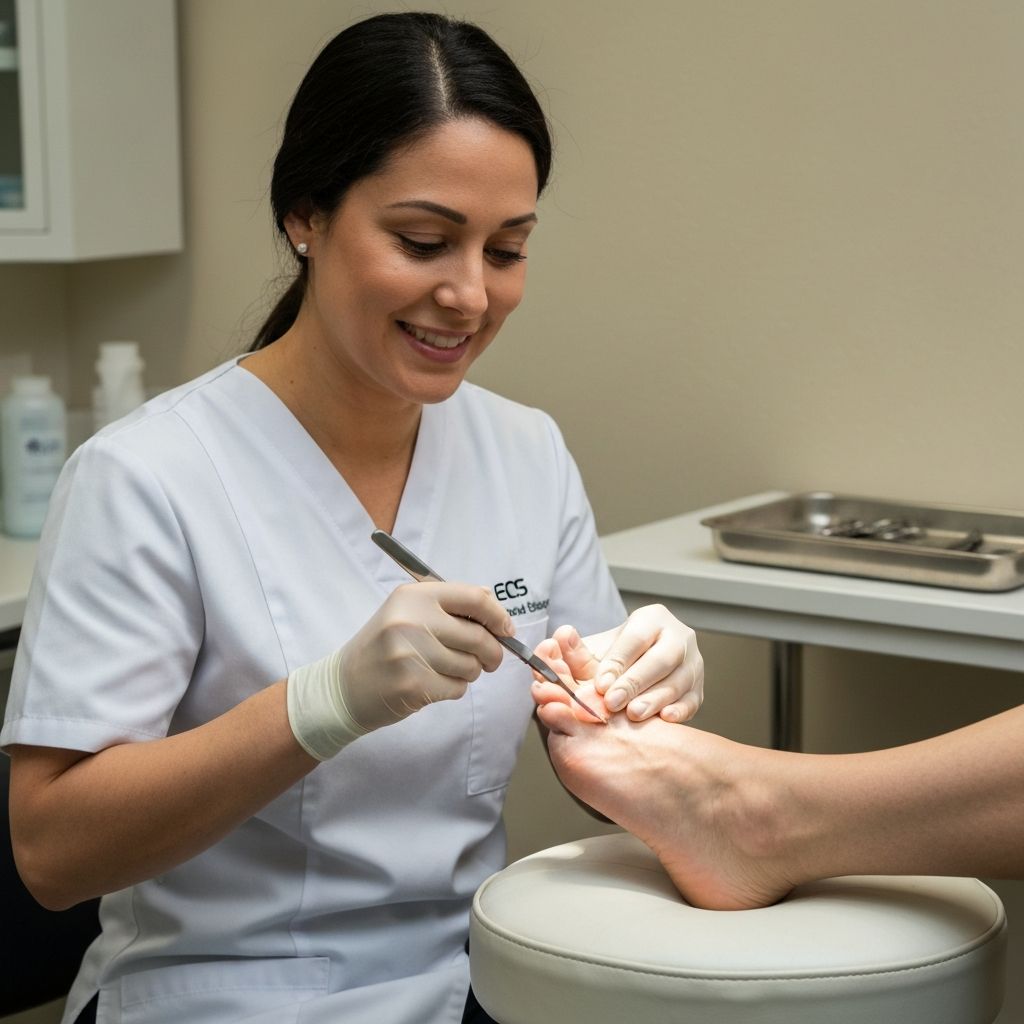
Using a sterile scalpel, we carefully and precisely remove the corn or callus. The overlying skin contains no live nerve endings, so the procedure is completely painless — patients are often amazed at how comfortable it is.
Core Enucleation
For hard corns, we carefully enucleate (remove) the hard central core. This is the part that presses on the nerve and causes pain. Removing the core provides immediate and dramatic relief.
Skin Smoothing
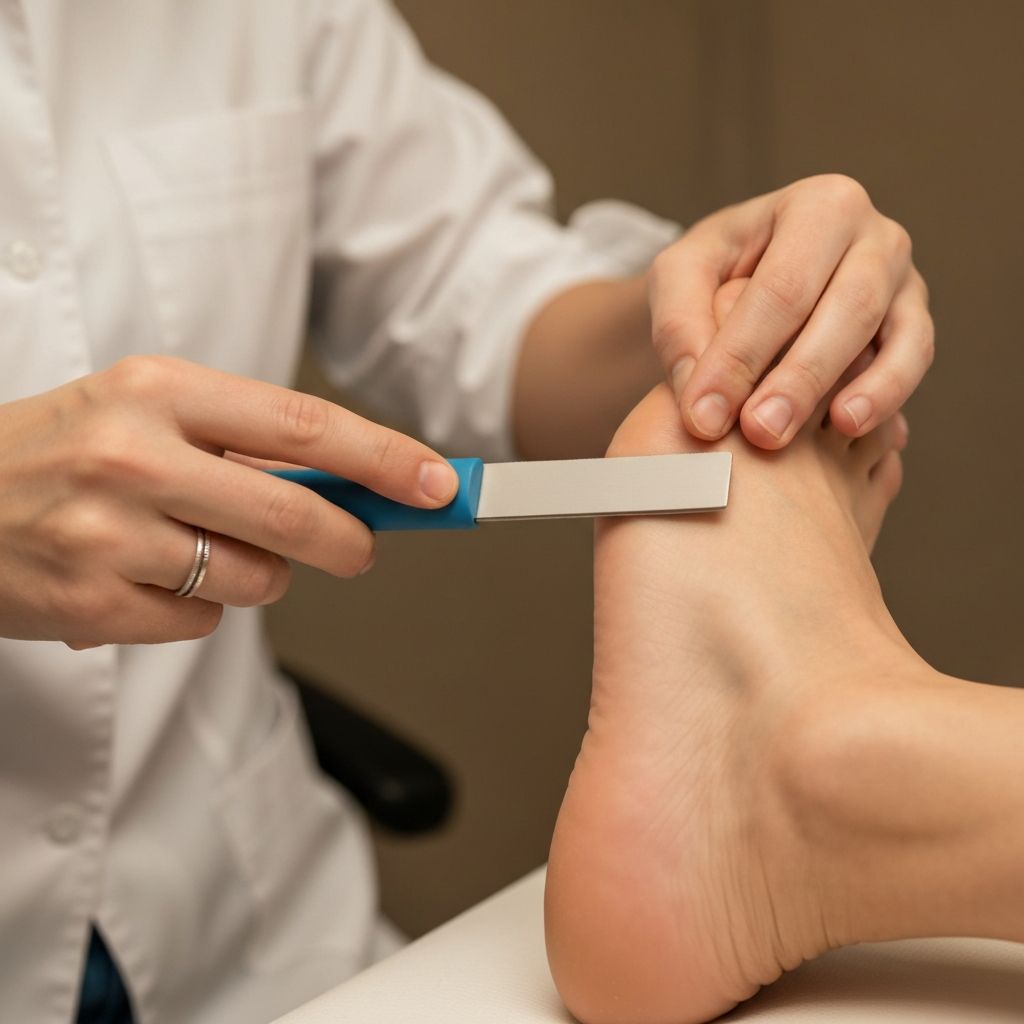
Remaining hard skin is carefully filed and smoothed to a comfortable finish. The treated area is inspected and dressed if required. Most patients can walk out feeling a noticeable difference immediately.
Cause Identification
We identify what caused the corn or callus to form — footwear issues, gait problems, bony prominences, or structural factors — and provide tailored advice to slow the rate of recurrence.
Prevention Plan
Where appropriate, we provide specialist padding, deflective devices, or orthotic referral to redistribute pressure long-term. We also advise on footwear and skin care to maintain healthy feet.
Expert Care That Gets Results
- Safe, sterile, clinically precise corn and callus removal
- Same-day appointments available for painful corns
- Completely painless — no injections, no cutting of live skin
- Immediate and dramatic relief from the very first appointment
- HCPC-registered podiatrists with NHS and private experience
- Root cause analysis to prevent rapid recurrence
- Tailored padding, orthotics and footwear advice
- Safe for adults, elderly patients, children, and diabetics
- Trusted by GPs and families across Nottinghamshire
Serving patients across Nottinghamshire
FAQs
Corn & Callus Removal — Your Questions Answered
No — corn removal by a podiatrist is completely painless. The thickened skin overlying a corn contains no live nerve endings, so using a sterile scalpel to remove it causes no discomfort at all. Most patients are genuinely surprised at how pain-free the procedure is. Many describe immediate relief the moment the core is removed.
We strongly advise against corn plasters (salicylic acid pads). These products dissolve healthy surrounding skin as well as the corn, and can cause burns, skin breakdown, and serious infection — especially in diabetic patients, elderly patients, or anyone with poor circulation. Professional removal is far safer, faster, and more effective.
Corns and calluses always return if the underlying cause — pressure and friction — is not addressed. Unless the pressure source is removed or redistributed, the body will keep producing protective thickened skin. Your podiatrist will identify the cause (footwear, gait, bony prominences, or structural issues) and advise on padding, orthotics, or shoe changes to slow recurrence.
A callus is a broad, diffuse area of thickened skin caused by repeated pressure. A corn is a more concentrated, conical-shaped thickening with a hard central core — it is the core pressing on the underlying nerve that causes the sharp, specific pain associated with corns. Corns typically have a clearer, more defined edge than calluses.
We treat all types of corns and calluses — hard corns (the most common), soft corns (between the toes), seed corns (tiny clusters on the heel or ball of the foot), and broader calluses. We also treat cracked heels, which are a common and painful form of heel callus.
Yes. Soft corns between the toes can be extremely painful and are prone to infection if not treated. We carefully remove these using fine sterile instruments and can advise on toe separators or padding to prevent them returning.
A routine corn or callus removal appointment typically takes 30–45 minutes, which includes assessment, treatment, and aftercare advice. If you have multiple corns or extensive calluses, the appointment may take slightly longer.
Just wear or bring comfortable shoes and socks. There is no special preparation needed. Avoid using corn plasters or cutting the area yourself before your appointment, as this can make it harder to assess and treat.
Yes — when performed by a qualified HCPC-registered podiatrist. We take all appropriate precautions for diabetic patients and use fully sterile instruments. In fact, regular professional corn and callus removal is especially important for diabetic patients, as leaving these untreated significantly increases the risk of ulceration and infection.
This varies by individual. Most patients find that corns and calluses recur within 6–12 weeks without underlying cause management. With appropriate padding, footwear changes, or orthotics, intervals between treatments can be extended significantly.
Yes — although less common than in adults, children can develop corns and calluses due to footwear, sporting activity, or structural foot issues. We treat children using the same gentle, painless techniques and always adopt a reassuring, child-friendly approach.
Our clinic is in Arnold, Nottingham. We see patients from across Nottinghamshire including Gedling, Carlton, Mapperley, Woodthorpe, Ravenshead, Hucknall, Daybrook, Bestwood, Calverton, Lambley, Burton Joyce, West Bridgford, Beeston, Bingham, Radcliffe-on-Trent, Mansfield, Newark and surrounding areas. Home visits are also available.
Podiatrist and chiropodist are different names for the same profession — both refer to a specialist in foot health and are protected titles registered with the HCPC. At General Foot Care all our clinicians are HCPC-registered and experienced in professional corn and callus removal.
Yes. We provide mobile podiatry home visits across Nottinghamshire for patients who cannot travel to the clinic — including elderly patients, those recovering from surgery, and care home residents. Visit our Home Visits page or call us to arrange.
Walk Away Pain-Free Today
Book a corn and callus removal appointment at our Arnold, Nottingham clinic. Same-day appointments available — call us or book online now.