Nail Surgery
Arnold, Nottingham.
Suffering from a recurring or severely ingrown toenail? Nail surgery is the definitive, permanent solution — performed in-clinic under local anaesthetic with a 95–98% success rate.
We perform both partial nail avulsion (PNA) and total nail avulsion (TNA) with phenolisation, ensuring the problematic nail edge is permanently prevented from regrowing. Walk in with pain — walk out without it.
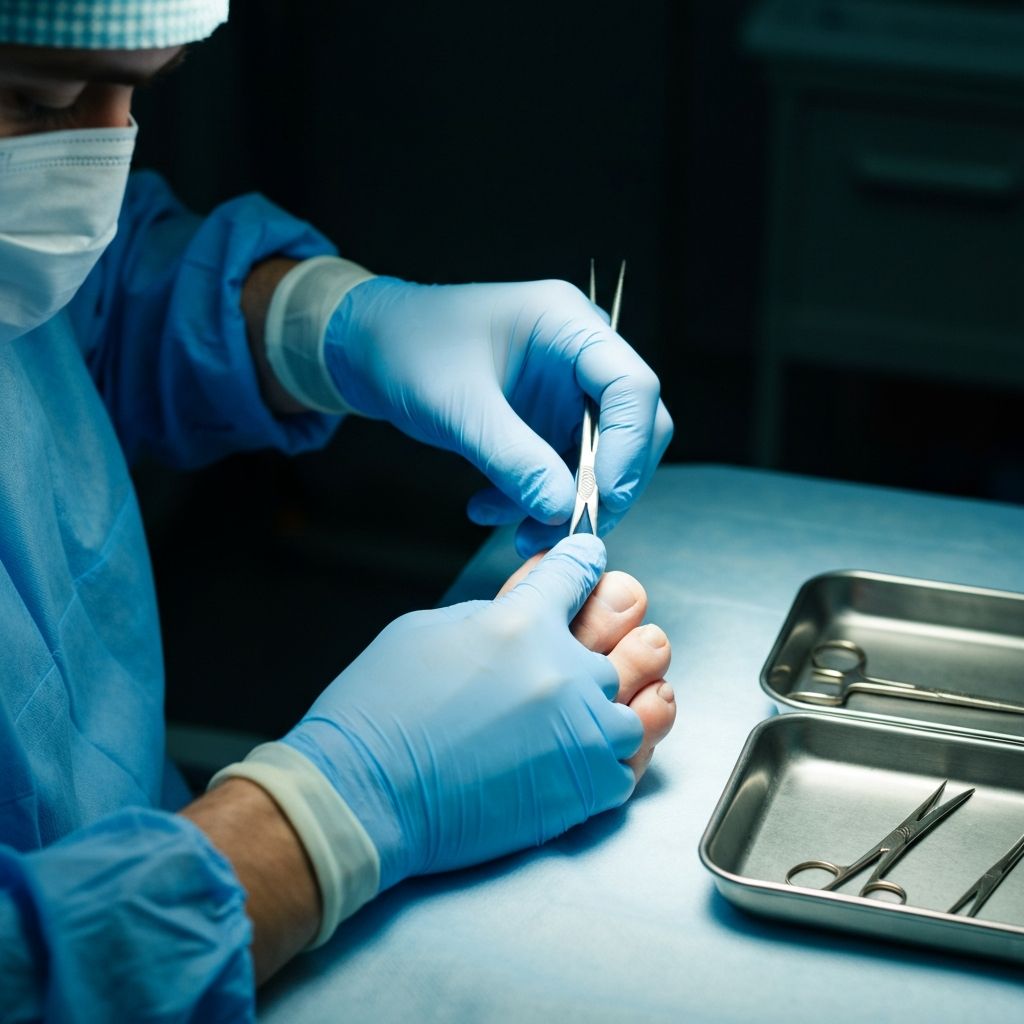
Do not delay — nail infections can escalate quickly
An untreated infected ingrown toenail can spread to the bone. If your toe is red, swollen, producing discharge, or extremely painful, please contact us immediately. Early surgical intervention avoids far more serious complications, especially for diabetic patients.
When Is Nail Surgery Needed?
Not every ingrown toenail requires surgery — but these situations are clear indicators that a surgical solution is the right choice.
Recurring Ingrown Toenails
If your ingrown toenail keeps coming back despite conservative treatment, nail surgery offers a permanent solution by removing the offending nail edge and preventing it from regrowing.
Severe Infection or Abscess
An infected ingrown toenail that has formed an abscess, is producing discharge, or is significantly swollen may require surgical intervention to resolve the infection and heal properly.
Chronic Pain Affecting Daily Life
When nail pain is affecting your ability to walk, work, exercise, or sleep, surgery provides rapid relief and a permanent end to the cycle of discomfort.
Failed Conservative Treatment
If taping, packing, bracing, or antibiotics have not resolved your ingrown toenail, surgery is the next logical step — and for most patients, the last one they will ever need.
Nail Deformity or Overcurvature
Severely involuted (pincer) nails or nails with significant structural deformity that cause ongoing pain may benefit from partial or total avulsion to restore comfort permanently.
High-Risk Patients (Diabetic / Vascular)
For diabetic or vascular patients with ingrown toenails, early surgical intervention is often recommended to prevent minor nail problems from escalating into serious complications.
What Happens During Nail Surgery?
A step-by-step walkthrough of exactly what to expect on the day of your procedure — no surprises.
Initial Consultation
We assess your nail, discuss your symptoms and medical history, and confirm that nail surgery is the right option for you. We explain the procedure in full and answer all your questions before any treatment begins.
No surprises — full transparencyLocal Anaesthetic Injection
A local anaesthetic is injected at the base of the toe. This numbs the toe completely within minutes. The injection itself may cause a brief sharp sensation, but once the anaesthetic takes effect, you will feel no pain whatsoever during the procedure.
Completely pain-free once numbNail Avulsion
Depending on your case, we perform either a partial nail avulsion (removing just the offending nail edge) or a total nail avulsion (removing the entire nail). The procedure is precise, controlled, and takes only a few minutes.
Partial or total — tailored to your nailPhenolisation
Phenol (a chemical cauterising agent) is applied to the nail matrix — the area that produces the nail — to prevent the removed portion from regrowing. This is what makes the procedure permanent. It is quick, safe, and highly effective.
98% permanent success rateDressing & Aftercare
The toe is dressed with a sterile bandage and you are given full written aftercare instructions. Most patients walk out of the clinic comfortably and return to normal activities within 24–48 hours.
Walk out the same dayTypes of Nail Surgery
We offer both surgical options and will recommend the most appropriate one based on your individual nail and symptoms.
Partial Nail Avulsion (PNA)
Most commonThe most common nail surgery. Only the offending edge of the nail is removed — typically one or both sides. The remaining nail plate is left intact, giving a natural appearance. Ideal for recurring one-sided or two-sided ingrown toenails.
Total Nail Avulsion (TNA)
For severe casesThe entire nail plate is removed. This is recommended for severely deformed, overcurved, or extensively damaged nails where partial removal would not provide a lasting solution. The toe heals well without the nail.
Both procedures are performed with phenolisation — a chemical treatment applied to the nail matrix that permanently prevents the removed nail edge or entire nail from regrowing. This is what gives nail surgery its high permanent success rate.

Recovery & Aftercare
Nail surgery recovery is straightforward for most patients. Following our detailed aftercare instructions carefully will ensure the best possible healing and results.
- Walk out of the clinic the same day
- Wear open shoes or sandals for the first few days
- Keep the dressing clean and dry for 48 hours
- Soak and re-dress the toe daily from day 3 onwards
- Return for a follow-up dressing check at 1–2 weeks
- Most patients return to normal footwear within 2 weeks
- Full healing typically takes 6–8 weeks
- No stitches — the wound heals naturally
All nail surgery patients receive a comprehensive written aftercare guide and are booked in for a follow-up dressing check. We are contactable between appointments if any concerns arise.
Why Choose General Foot Care for Nail Surgery?
We perform nail surgery regularly, using proven techniques and clinical protocols that prioritise your comfort, safety, and outcomes.
Experienced Podiatrist
Nail surgery performed by a qualified, registered podiatrist with extensive surgical experience.
In-Clinic, No Referral
No waiting for an NHS referral. Book directly with us for a prompt appointment at our Arnold clinic.
Transparent Pricing
Full procedure cost explained before treatment begins. No hidden fees, no unexpected charges.
Full Aftercare Support
Written aftercare guide, follow-up dressing checks, and direct contact between appointments.
Serving All of Nottinghamshire
Our nail surgery clinic is based in Arnold, Nottingham. We welcome patients from across all of Nottinghamshire — no referral needed.
FAQs
Nail Surgery — Frequently Asked Questions
The procedure itself is completely pain-free. A local anaesthetic is injected at the base of the toe, which numbs it fully within minutes. You may feel brief pressure or movement during the procedure, but no pain at all. Once the anaesthetic wears off (usually a few hours later), some mild soreness is normal and easily managed with standard over-the-counter painkillers such as paracetamol or ibuprofen.
The entire appointment, including consultation, anaesthetic, procedure, and dressing, typically takes 45 to 60 minutes. The surgical procedure itself — once the toe is numb — takes only around 5 to 10 minutes. You will walk out of the clinic the same day.
Yes — when phenol is applied to the nail matrix, the success rate for permanent prevention of nail regrowth is approximately 95–98%. In rare cases, a small spicule of nail may attempt to regrow, but this is easily managed. For the vast majority of patients, nail surgery is a one-time, permanent solution.
A partial nail avulsion (PNA) removes only the problematic edge of the nail — usually one or both sides — leaving the main body of the nail intact. This is the most commonly performed procedure and gives the best cosmetic result. A total nail avulsion (TNA) removes the entire nail plate and is used for severely deformed or repeatedly problematic nails. Your podiatrist will recommend the most appropriate type based on your examination.
Most patients are back to normal activities within 24–48 hours and can return to work the next day in most cases. You will need to wear open shoes for a few days to avoid pressure on the toe. Daily dressing changes at home are required from day 3 onwards. A follow-up appointment is arranged at 1–2 weeks. Full healing of the surgical site typically takes 6–8 weeks.
If a partial nail avulsion is performed with phenolisation, the removed nail edge is permanently prevented from regrowing, while the remaining nail continues to grow normally. If a total nail avulsion is performed with phenolisation, no nail will regrow. The toe heals very well without a nail and most patients are happy with the result.
Yes — you will walk out of the clinic the same day. Most patients experience minimal discomfort after the anaesthetic wears off. We recommend wearing open-toed shoes or sandals for the first few days to avoid pressure on the dressing. Strenuous exercise and sports should be avoided for 1–2 weeks.
Most patients are able to return to desk-based or light work the following day. If your job involves standing for long periods, physical labour, or wearing specific closed footwear, you may need 2–5 days off. We will advise you based on your specific role and the nature of the procedure performed.
Nail surgery can be performed safely on many diabetic patients, but a thorough assessment of your circulation and nerve function is essential beforehand. We follow strict clinical protocols for high-risk patients, including careful anaesthetic choice, dressing management, and post-operative monitoring. Please inform us of your diabetic status and any complications when booking.
Your follow-up appointment at 1–2 weeks allows us to check that the surgical site is healing well, remove any residual debris, re-dress the toe if needed, and answer any questions you may have. We assess the result and confirm that the procedure has been successful. Most patients only require one or two follow-up visits.
Yes. If both edges of the nail are ingrown or causing problems, a bilateral partial nail avulsion can be performed in a single appointment. This is very common and adds only a few minutes to the procedure time. The central nail body remains intact and looks natural once healed.
Light walking is fine from the day of surgery. We recommend avoiding running, gym sessions, swimming, and contact sports for at least 2 weeks after the procedure. This allows the surgical site to begin healing without the risk of the dressing becoming wet, dirty, or disturbed. Your podiatrist will give you specific guidance based on your activity level.
We regularly see patients who have had nail surgery elsewhere and are experiencing slow healing, infection, or partial nail regrowth. We can assess the site, treat any complications, and perform a revision procedure if necessary. Please contact us as soon as possible if you are concerned about your healing.
Yes. Our clinic is based in Arnold, Nottingham, and we see patients from across all of Nottinghamshire including West Bridgford, Carlton, Gedling, Hucknall, Beeston, Mapperley, Sherwood, Daybrook, Bestwood, Bulwell, Eastwood, Long Eaton, Stapleford, Radcliffe-on-Trent, Bingham, Mansfield, Newark, Worksop, Retford, Southwell, and all surrounding areas.
Ready to Walk Without Limits?
Book an appointment at our Arnold, Nottingham clinic today. Same-day appointments often available.