Sports Injury
Assessment.
Sports injuries affect runners, footballers, tennis players, gym-goers and athletes of all levels — causing pain, limiting performance and disrupting training.
Our expert sports injury assessments combine biomechanical analysis, video gait analysis, functional testing and clinical diagnosis — identifying the root cause and creating a structured return-to-sport plan.
Common search terms: sports injury clinic near me · running injury assessment Nottingham · sports podiatrist · runner's knee treatment · shin splints diagnosis · Achilles pain running · football injury assessment · ankle sprain recovery · sports biomechanics clinic · return to sport programme Nottinghamshire
Who Benefits from Sports Injury Assessment?
Our sports injury assessments support athletes and active individuals across all sports and fitness levels.
Runners & Distance Athletes
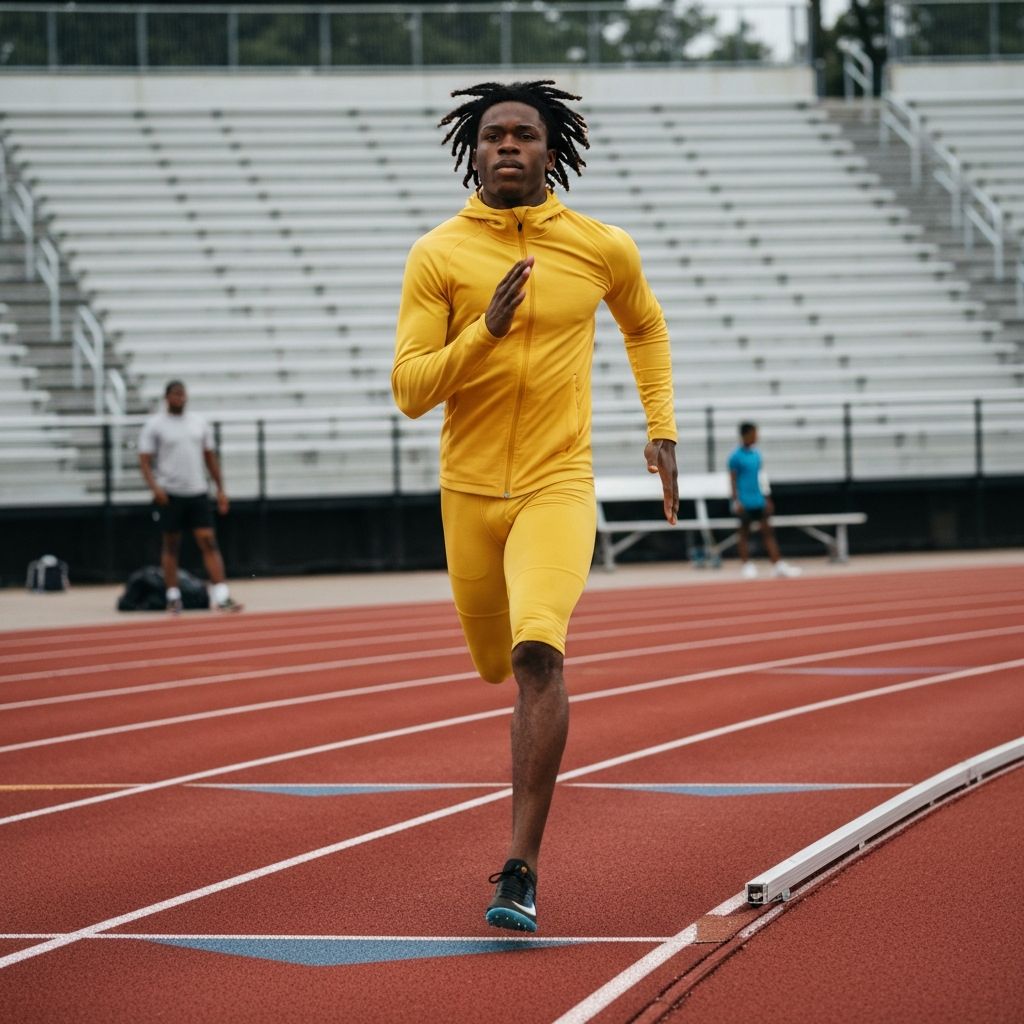
Marathon runners, half-marathon runners, 5K/10K runners, ultrarunners and triathletes with repetitive stress injuries, overuse injuries or biomechanical issues.
Football & Team Sport Athletes
Football, rugby, basketball, netball and hockey players with ankle sprains, ACL injuries, knee pain, shin splints or foot injuries.
Gym-Goers & CrossFit Athletes
Weight lifters, CrossFit athletes, HIIT enthusiasts and gym-goers with Achilles pain, plantar fasciitis, ankle instability or heel pain from high-impact training.
Racket Sport Athletes
Tennis, badminton, squash and padel players with lateral ankle sprains, calf strains, plantar fasciitis or foot stress from rapid direction changes.
Cyclists & Triathletes
Road cyclists, mountain bikers and triathletes with Achilles tendinopathy, metatarsalgia, hot spots, numbness or biomechanical inefficiencies affecting power output.
Junior & Youth Athletes
Young athletes (10–18) with Sever's disease (heel pain), growing pains, Osgood-Schlatter disease, flat feet or biomechanical issues affecting performance and development.
Weekend Warriors & Recreational Athletes
Casual runners, park footballers, recreational gym-goers and active individuals returning to sport after a break — prone to overload injuries from sudden activity increases.
Athletes with Previous Injuries
Anyone with a history of ankle sprains, knee injuries, stress fractures, plantar fasciitis or Achilles pain wanting to prevent re-injury and return to sport safely.
Your Sports Injury Assessment
Our comprehensive assessment identifies the injury, diagnoses the root cause and creates a personalized return-to-sport plan.
Injury History & Training Load Analysis
We start by understanding your injury — when it happened, what you were doing, symptoms, pain location and severity. We review your training volume, intensity, progression and recent changes (mileage spikes, new shoes, surfaces).
Comprehensive injury historyClinical Examination & Palpation
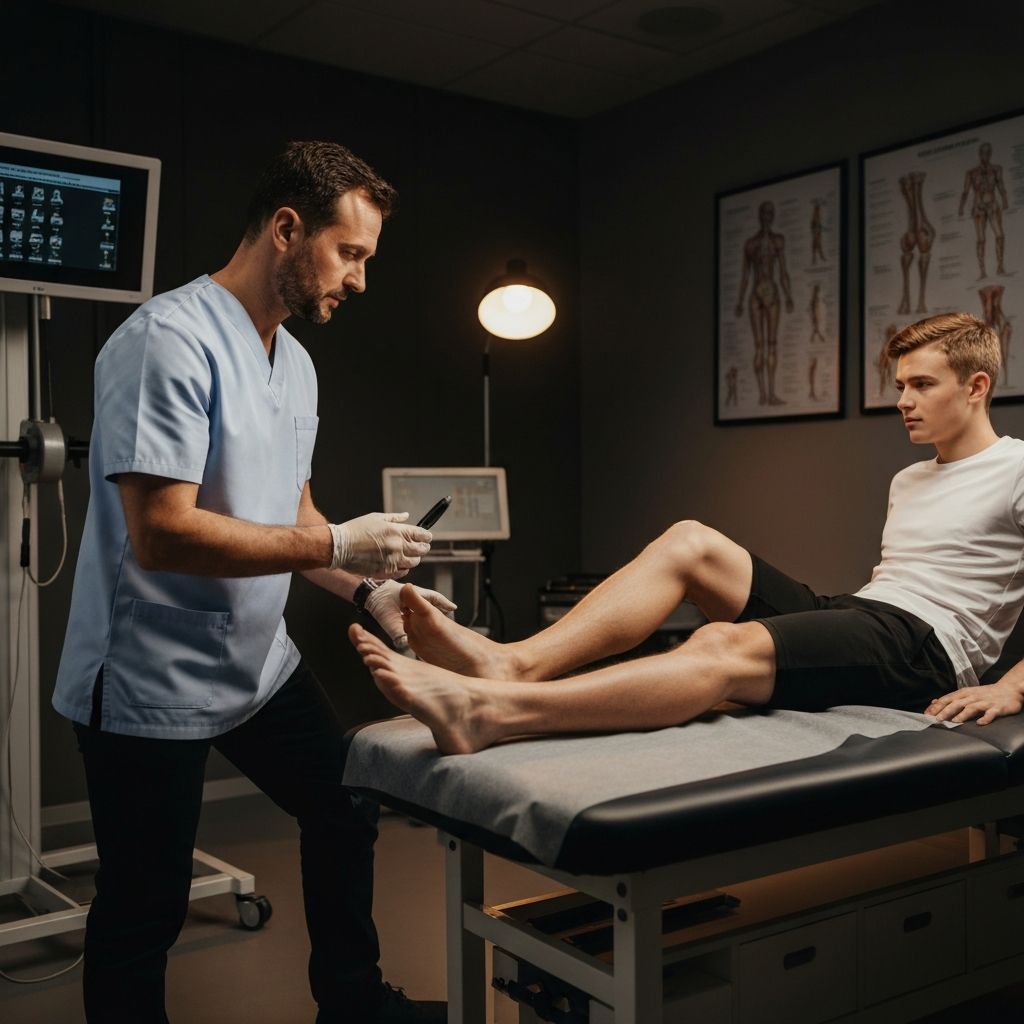
We examine the injured area — palpating joints, tendons, ligaments and muscles to identify pain, swelling, instability or weakness. We assess range of motion, strength and functional movement.
Hands-on clinical assessmentBiomechanical Assessment & Gait Analysis
We assess your standing posture, foot alignment, leg length and pelvic symmetry. We analyze your walking and running gait — looking for overpronation, supination, asymmetries or compensatory patterns contributing to injury.
Video gait analysisFunctional Movement Screening
We test sport-specific movements — single-leg squats, hops, lunges, calf raises and balance. These functional tests identify weakness, instability, asymmetry or movement dysfunction.
Sport-specific testingPressure Mapping & Podoscope Analysis
We use pressure plates and podoscopes to visualize foot pressure distribution, arch collapse and loading patterns. This identifies biomechanical faults causing injury.
Visual pressure analysisFootwear & Equipment Review
We assess your footwear — checking cushioning, support, heel drop, wear patterns and suitability for your sport. Worn-out shoes, inappropriate footwear or incorrect sizing contribute to injury.
Footwear auditDiagnosis & Severity Grading
Based on your assessment, we diagnose the injury (plantar fasciitis, Achilles tendinopathy, PFPS, shin splints, stress fracture, etc.), grade severity (mild, moderate, severe) and identify contributing factors.
Evidence-based diagnosisTreatment Plan & Return-to-Sport Timeline
We create a personalized treatment plan — including load management, strengthening exercises, biomechanical correction, orthotics (if needed) and a phased return-to-sport programme with realistic timelines.
Structured rehab planEvidence-Based Sports Injury Treatment
Our treatment plans combine injury management, biomechanical correction and progressive return-to-sport programming.
Injury-Specific Diagnosis & Education
We diagnose your injury (plantar fasciitis, Achilles tendinopathy, shin splints, PFPS, ankle sprain, etc.) and explain why it happened, what's causing it and how to prevent recurrence.
Load Management & Activity Modification
We adjust your training load to allow healing while maintaining fitness. This may include reducing mileage, intensity or frequency, or replacing high-impact activities with cross-training (swimming, cycling, elliptical).
Targeted Strengthening & Rehabilitation Exercises
We prescribe evidence-based strengthening exercises to rebuild strength, improve stability and correct weakness. Examples include eccentric calf loading, hip strengthening, glute activation and core stability.
Biomechanical Correction & Custom Orthotics
If overpronation, flat feet, leg length discrepancy or poor alignment are contributing to injury, we prescribe custom orthotics to control biomechanics, reduce stress and prevent re-injury.
Footwear Prescription & Recommendations
We recommend appropriate footwear for your sport, foot type and biomechanics — ensuring adequate cushioning, support, stability and durability. We advise on when to replace shoes (typically every 400–600 miles for runners).
Running Technique & Movement Coaching
We provide gait retraining and running technique coaching — reducing impact forces, improving cadence, optimizing foot strike and correcting compensatory patterns.
Gradual Return-to-Sport Programme
We guide you through a structured, progressive return-to-sport plan — gradually increasing volume, intensity and sport-specific loading to rebuild resilience and confidence without re-injury.
Why Athletes Choose General Foot Care
Specialist Sports Biomechanics
HCPC-registered podiatrists with advanced training in sports biomechanics, gait analysis and athletic injury management.
Advanced Video Gait Analysis
State-of-the-art video gait analysis, pressure mapping and biomechanical assessment technology.
Personalized Return-to-Sport Plans
Structured, progressive return-to-sport programmes tailored to your sport, fitness level and injury recovery.
Evidence-Based Treatment
All treatment protocols are based on the latest sports medicine research and clinical guidelines.
Related Services
Comprehensive sports injury care and performance optimization.
Serving Athletes Across Nottinghamshire
Arnold · Gedling · Carlton · Mapperley · Woodthorpe · Ravenshead · Hucknall · Daybrook · Bestwood · Calverton · Lambley · Burton Joyce · West Bridgford · Beeston · Bingham · Radcliffe-on-Trent · Mansfield · Newark · Retford · Worksop · and surrounding Nottinghamshire areas
FAQs
Frequently Asked Questions
A sports injury assessment is a comprehensive biomechanical and clinical evaluation of an athletic injury. We diagnose the injury, identify the root cause (training errors, biomechanics, weakness, footwear), assess severity and create a personalized treatment and return-to-sport plan. Our assessment includes injury history, clinical examination, gait analysis, functional testing, pressure mapping and footwear review.
We treat all lower limb sports injuries including: plantar fasciitis, heel pain, Achilles tendinopathy, shin splints, stress fractures, patellofemoral pain syndrome (runner's knee), IT band syndrome, ankle sprains, ankle instability, calf strains, metatarsalgia, Morton's neuroma, blisters, black toenails, sesamoiditis, and overuse injuries from running, football, rugby, tennis, CrossFit and other sports.
No. You can book a sports injury assessment directly with us — no GP referral required. We're HCPC-registered podiatrists with specialist training in sports biomechanics, gait analysis and athletic injury management.
A full sports injury assessment typically takes 45–60 minutes. This includes injury history, clinical examination, video gait analysis, functional testing, pressure mapping, diagnosis, treatment planning and exercises. Follow-up appointments are usually 30 minutes.
Yes. We provide realistic return-to-sport timelines based on injury severity, healing progress and functional testing. We create a structured, phased return-to-sport programme — gradually increasing volume and intensity to minimize re-injury risk. Timelines vary: mild injuries may allow return in 2–4 weeks, moderate injuries 4–8 weeks, severe injuries 8–16+ weeks.
Yes. Injury prevention is a key focus. We identify biomechanical risk factors (overpronation, leg length discrepancy, weakness, poor running technique) and provide corrective orthotics, strengthening exercises, gait retraining and footwear advice. We also review training load management to prevent overload injuries.
Yes. If biomechanical issues (overpronation, flat feet, high arches) are contributing to injury or affecting performance, we prescribe custom sports orthotics. These are designed for your sport — lightweight, low-profile, durable and optimized for running, football, tennis, cycling, etc.
Yes. We provide video gait analysis, identify biomechanical faults (overstriding, heel striking, excessive pronation, asymmetry) and offer running technique coaching — improving cadence, foot strike, posture and efficiency to reduce injury risk and enhance performance.
Bring: your current sports shoes (running shoes, football boots, trainers), any orthotics or insoles you currently use, and wear shorts or clothing that allows us to see your legs and feet. If possible, bring a training log or details of your recent training volume.
Yes. We work with athletes of all levels — from recreational runners and weekend warriors to semi-professional and elite athletes. Our biomechanical assessments, gait analysis and treatment protocols are the same evidence-based approaches used in professional sports medicine.
Our sports injury assessment (including gait analysis, biomechanical assessment, diagnosis and treatment plan) is competitively priced. Please contact us for current pricing. We also offer follow-up appointments and custom orthotics if required.
Our clinic is in Arnold, Nottingham. We treat sports injuries for athletes across Nottinghamshire including Gedling, Carlton, Mapperley, Woodthorpe, Ravenshead, Hucknall, Daybrook, Bestwood, Calverton, Lambley, Burton Joyce, West Bridgford, Beeston, Bingham, Radcliffe-on-Trent, Mansfield, Newark, Retford, Worksop and surrounding areas.
Ready to Walk Without Limits?
Book an appointment at our Arnold, Nottingham clinic today. Same-day appointments often available.