Posture &
Alignment.
Poor posture, leg length discrepancy, pelvic tilt and spinal misalignment cause chronic back pain, hip pain, knee pain and accelerated joint degeneration.
Our expert posture and alignment assessments identify structural and functional imbalances — prescribing custom orthotics, heel lifts and corrective exercises to restore optimal alignment and reduce pain.
360°
Postural View
Pelvic
Tilt Analysis
Leg Length
Measurement
Searching for: leg length discrepancy treatment • pelvic tilt correction • spinal alignment assessment • posture clinic near me • back pain from feet • uneven leg length • postural imbalance treatment • lower limb alignment • asymmetric gait • leg length difference • pelvic asymmetry • scoliosis screening
Signs You Need a Posture Assessment
Postural imbalances often develop gradually — causing persistent pain, asymmetry and compensatory movement patterns.
Chronic Lower Back Pain
Persistent lower back pain, stiffness, muscle tension or spinal discomfort not improving with standard treatments.
Hip or Pelvic Pain
One-sided hip pain, pelvic discomfort, sacroiliac joint dysfunction or asymmetric pelvic loading.
Knee Pain or Asymmetry
Unilateral knee pain, uneven knee tracking, patellofemoral pain or knee wear on one side.
Leg Length Discrepancy
One leg feels shorter, uneven trouser hems, asymmetric shoe wear or tilted pelvis when standing.
Spinal Curvature or Scoliosis
Visible spinal curve, uneven shoulders, rib hump or compensatory postural adjustments.
Uneven Foot Pressure or Wear
Asymmetric shoe wear, more callus on one foot, uneven foot pressure distribution or gait asymmetry.
What Causes Postural Imbalance?
Posture and alignment issues have multiple root causes — from structural bone differences to muscle imbalances and previous injuries.
Structural Leg Length Discrepancy
True anatomical difference in femur or tibia bone length — congenital or from growth plate injury, fracture or hip replacement.
Functional Leg Length Discrepancy
Apparent leg length difference caused by pelvic tilt, hip rotation, muscle imbalance or spinal asymmetry — not true bone length difference.
Foot Pronation Asymmetry
One foot overpronating more than the other — creating functional leg length difference and pelvic tilt.
Pelvic Tilt or Rotation
Anterior pelvic tilt, posterior pelvic tilt, lateral pelvic tilt or pelvic rotation affecting spinal alignment and lower limb biomechanics.
Scoliosis or Spinal Curvature
Lateral spinal curvature (scoliosis) causing postural compensation, uneven shoulder height and asymmetric loading.
Muscle Weakness or Imbalance
Weak core, hip or glute muscles causing postural instability, compensatory patterns and alignment dysfunction.
Previous Injury or Surgery
Hip replacement, femur fracture, ACL surgery, ankle injury or spinal surgery altering alignment and biomechanics.
Joint Stiffness or Arthritis
Hip arthritis, knee osteoarthritis, ankle stiffness or spinal joint degeneration affecting mobility and posture.
Your Posture & Alignment Assessment
Our comprehensive 8-step assessment identifies postural imbalances, leg length discrepancy and biomechanical dysfunction.
Comprehensive Postural History
We start by understanding your symptoms — back pain, hip pain, knee pain, asymmetry or gait issues. We review your medical history including injuries, surgeries, scoliosis, arthritis and previous treatments.
Symptom and history reviewStatic Postural Assessment
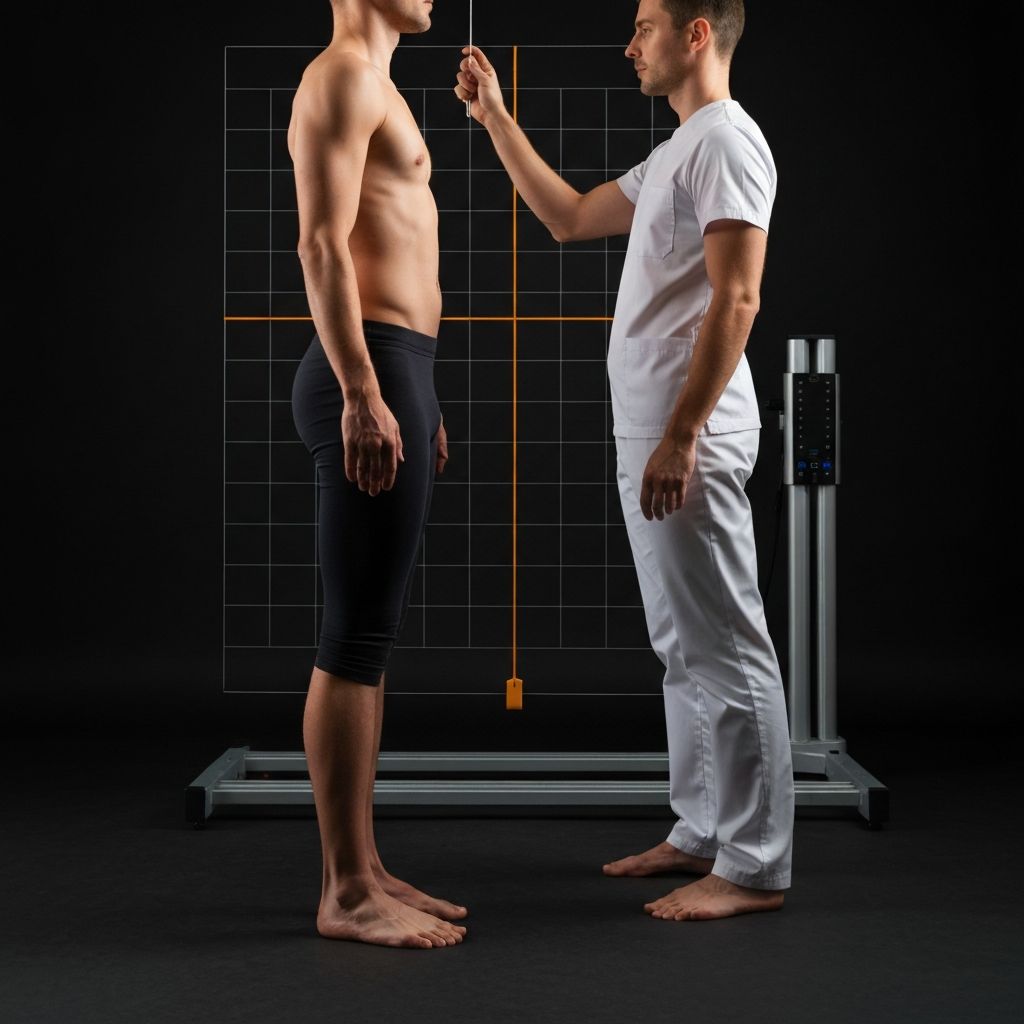
We assess your standing posture from front, back and side views — evaluating spinal alignment, shoulder height, pelvic tilt, hip position, knee alignment and foot position. We use a posture grid or plumb line for precision.
360° postural evaluationLeg Length Measurement
We measure true anatomical leg length (from hip to ankle) and apparent leg length to identify structural vs functional discrepancy. We use tape measurement and clinical tests.
Structural & functional leg lengthPelvic Alignment & Tilt Assessment
We assess pelvic alignment — checking for anterior tilt, posterior tilt, lateral tilt or rotation. We palpate the anterior superior iliac spines (ASIS) and posterior superior iliac spines (PSIS) to identify asymmetry.
Pelvic symmetry analysisSpinal Curvature & Scoliosis Screening
We assess spinal alignment — checking for lateral curvature (scoliosis), thoracic kyphosis (upper back curve), lumbar lordosis (lower back curve) and rib hump. We use the Adams forward bend test if scoliosis is suspected.
Spinal alignment screeningGait & Dynamic Postural Analysis
We observe your walking and running gait — identifying asymmetries, compensatory patterns, limping, uneven stride length or abnormal weight transfer. Video gait analysis captures subtle asymmetries.
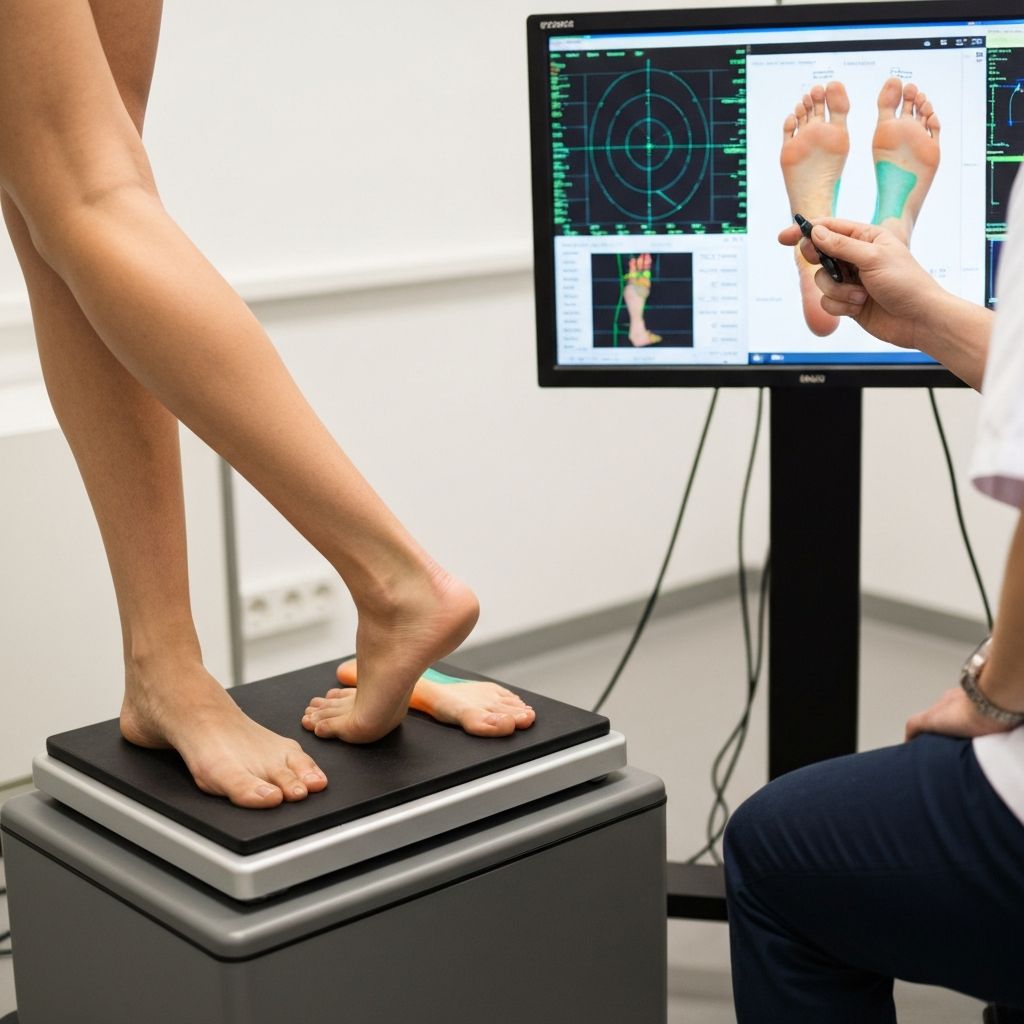
Dynamic movement assessmentPressure Mapping & Podoscope Analysis
We use pressure plates and podoscopes to assess weight distribution — identifying uneven loading, asymmetric foot pressure, leg length discrepancy patterns and compensatory biomechanics.
Visual pressure distributionDiagnosis & Treatment Planning
Based on your assessment, we diagnose postural issues (leg length discrepancy, pelvic tilt, scoliosis, muscle imbalance), identify contributing factors and create a treatment plan including orthotics, heel lifts, exercises or referral if needed.
Personalized treatment planEvidence-Based Postural Correction
Our treatment combines biomechanical correction, strengthening exercises and postural retraining to restore optimal alignment.
Diagnosis & Patient Education
We explain your postural issue (leg length discrepancy, pelvic tilt, spinal asymmetry), why it's causing symptoms and how biomechanical correction can improve alignment, reduce pain and prevent long-term degeneration.
Heel Lifts for Leg Length Discrepancy
If you have a structural leg length discrepancy (>5mm), we prescribe a heel lift to level the pelvis, correct spinal alignment and reduce compensatory stress. Lifts are gradually introduced to allow adaptation.
Custom Orthotics for Functional Correction
If functional leg length discrepancy is caused by asymmetric foot pronation, we prescribe custom orthotics to control biomechanics, level the pelvis and correct postural alignment.
Core & Hip Strengthening Exercises
We prescribe targeted strengthening exercises to stabilize the pelvis, improve core strength, balance hip muscles and support optimal postural alignment. Examples include planks, bridges, clamshells and single-leg exercises.
Postural Retraining & Awareness
We provide postural retraining advice — teaching optimal standing, sitting and sleeping postures to reduce spinal stress, improve alignment and prevent compensatory patterns.
Referral for Specialist Care (If Required)
If scoliosis, severe spinal misalignment, hip pathology or neurological issues are identified, we refer to physiotherapists, chiropractors, osteopaths, spinal specialists or orthopaedic surgeons as appropriate.
Follow-Up & Ongoing Monitoring
We review progress after 6–8 weeks — reassessing posture, alignment, symptoms and treatment effectiveness. We adjust heel lifts, orthotics or exercises based on adaptation and clinical improvement.
Why Choose General Foot Care for Posture Assessment?
Expert Biomechanical Analysis
HCPC-registered podiatrists with specialist training in lower limb biomechanics, postural assessment and alignment correction.
Advanced Diagnostic Equipment
State-of-the-art pressure plates, podoscopes, posture grids and video gait analysis — visualizing asymmetry and quantifying leg length discrepancy.
Comprehensive Assessment Protocol
8-step assessment covering static posture, dynamic gait, leg length, pelvic alignment, spinal screening and functional testing.
Evidence-Based Treatment
Custom orthotics, heel lifts, strengthening exercises and postural retraining backed by clinical research — not generic insoles or guesswork.
Multidisciplinary Referrals
Strong referral network with physiotherapists, chiropractors, osteopaths and spinal specialists for complex cases requiring collaborative care.
Related Services
Comprehensive biomechanical care for all your lower limb needs.
Gait Analysis
Video gait analysis for running and walking mechanics
Learn moreCustom Orthotics
Precision 3D-scanned custom orthotic insoles
Learn moreKnee Pain
Biomechanical assessment for patellofemoral pain & tracking issues
Learn moreSports Injury Assessment
Comprehensive athletic injury diagnosis & return-to-sport plans
Learn moreServing Nottinghamshire: Arnold • Gedling • Carlton • Mapperley • Woodthorpe • Ravenshead • Hucknall • Daybrook • Bestwood • Calverton • Lambley • Burton Joyce • West Bridgford • Beeston • Bingham • Radcliffe-on-Trent • Mansfield • Newark • Retford • Worksop
FAQs
Frequently Asked Questions
A posture and alignment assessment is a comprehensive biomechanical evaluation of your standing posture, spinal alignment, pelvic symmetry, leg length and foot position. We identify postural imbalances, leg length discrepancies, pelvic tilt, spinal curvature and compensatory patterns contributing to pain, stiffness or dysfunction. The assessment includes static posture analysis, leg length measurement, gait analysis and pressure mapping.
Yes. Foot biomechanics directly affect spinal alignment. Overpronation (flat feet), leg length discrepancy, asymmetric foot function or poor arch support can cause pelvic tilt, spinal misalignment and compensatory postural adjustments — leading to chronic lower back pain, hip pain or knee pain. Custom orthotics or heel lifts can correct foot biomechanics and improve spinal alignment.
Leg length discrepancy (LLD) is when one leg is shorter than the other. It can be structural (true bone length difference from birth, fracture or surgery) or functional (apparent difference from pelvic tilt, hip rotation or asymmetric foot pronation). Symptoms include back pain, hip pain, uneven gait, tilted pelvis and asymmetric shoe wear. Heel lifts or orthotics correct LLD.
Structural leg length discrepancy is treated with heel lifts — raising the shorter leg to level the pelvis and spine. Lifts are gradually introduced (starting at 50% of the discrepancy) to allow adaptation. Functional leg length discrepancy is treated with custom orthotics to control asymmetric foot pronation and correct pelvic alignment. Severe discrepancies (>2cm) may require referral to orthopaedics.
Yes. We screen for scoliosis (lateral spinal curvature) during postural assessment. We check shoulder height, rib hump, spinal alignment and use the Adams forward bend test. If scoliosis is identified, we assess severity, discuss implications and refer to spinal specialists (physiotherapist, chiropractor or orthopaedic surgeon) for management. We can provide orthotics to address lower limb biomechanics contributing to postural compensation.
Pelvic tilt can be caused by: muscle imbalance (weak core, tight hip flexors, weak glutes), leg length discrepancy, asymmetric foot pronation, scoliosis, hip arthritis, pregnancy, poor posture habits or previous injury. Symptoms include lower back pain, hip pain, poor posture and gait asymmetry. Treatment includes strengthening exercises, postural retraining, orthotics or heel lifts.
Yes. Custom orthotics control foot biomechanics (pronation, supination, arch collapse) which directly affects pelvic alignment and spinal posture. By correcting foot position, orthotics can reduce pelvic tilt, improve spinal alignment and reduce compensatory postural stress — alleviating back pain, hip pain and improving overall posture.
Not usually. Clinical leg length measurement (tape measurement from hip to ankle) is accurate for most cases. X-rays (scanogram) are only needed for surgical planning or if precise measurement (<1mm accuracy) is required. Most podiatrists use clinical measurement combined with postural assessment and gait analysis.
A comprehensive posture and alignment assessment typically takes 45–60 minutes. This includes postural history, static posture analysis, leg length measurement, pelvic alignment assessment, spinal screening, gait analysis, pressure mapping, diagnosis and treatment planning.
Yes — in most cases. Postural imbalances caused by muscle weakness, foot biomechanics, leg length discrepancy or poor habits can be corrected with strengthening exercises, custom orthotics, heel lifts and postural retraining. Structural issues (scoliosis, spinal degeneration) may not be fully correctable but can be managed to reduce pain and prevent progression.
If you have a structural leg length discrepancy, yes — heel lifts are typically needed long-term to maintain pelvic and spinal alignment. If the discrepancy is functional (caused by muscle imbalance or foot pronation), orthotics and exercises may correct the issue, and lifts may be temporary.
Our clinic is in Arnold, Nottingham. We provide posture and alignment assessments for patients across Nottinghamshire including Gedling, Carlton, Mapperley, Woodthorpe, Ravenshead, Hucknall, Daybrook, Bestwood, Calverton, Lambley, Burton Joyce, West Bridgford, Beeston, Bingham, Radcliffe-on-Trent, Mansfield, Newark, Retford, Worksop and surrounding areas.
Ready to Walk Without Limits?
Book an appointment at our Arnold, Nottingham clinic today. Same-day appointments often available.