Heel Pain
Diagnosis & Treatment.
Heel pain is one of the most common reasons people visit our clinic — and one of the most frustrating conditions to deal with. It can affect your walking, standing, work routine, exercise and overall quality of life.
At General Foot Care, we are recognised as one of the leading clinics in biomechanics and sports injury rehabilitation in Arnold and the wider Nottingham area. Our podiatrists combine advanced gait analysis, podoscope assessment and evidence-based treatment planning to diagnose the root cause of pain and improve long-term performance.
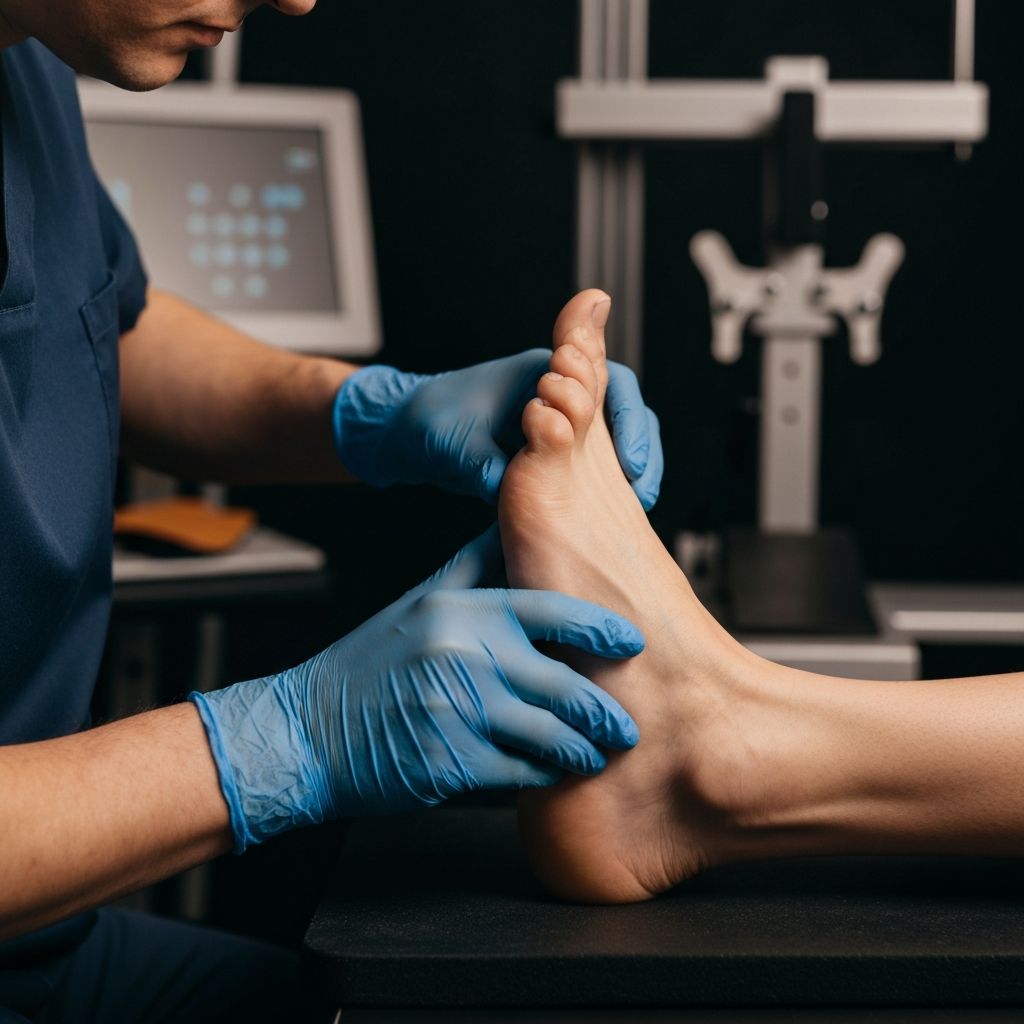
If you've searched for any of these, you're in the right place:
As one of the UK's leading podiatry and sports-injury centres, we specialise in diagnosing and treating heel pain using a combination of advanced biomechanical assessment, gait analysis, rehabilitation planning and foot function evaluation.
Common Causes
What causes heel pain?
Heel pain can be caused by many different conditions. That's why guessing, Googling or trying random insoles usually doesn't work.
Plantar Fasciitis
The most common cause of heel pain — especially morning pain or 'first-step pain'.
Achilles Tendinopathy
Pain at the back of the heel, especially during walking or running.
Heel Fat Pad Syndrome
A bruised or thinned heel pad causing deep, aching heel pain.
Nerve Entrapment
Such as Baxter's nerve, causing sharp heel pain on the inside of the foot.
Stress Fracture
Less common but serious — typically seen in runners or high-impact sports.
Overpronation or Poor Biomechanics
Foot posture problems can overload the heel with every step.
Tight Calves or Limited Ankle Mobility
Increasing tension through the plantar fascia and heel tissues.
Unsupportive or Worn-Out Footwear
Leading to overloading and repetitive strain.
Your heel pain may be due to just one of these — or a combination. This is why we always start with a full biomechanical assessment / gait analysis.
Why Assessment Matters
Why you need a biomechanical assessment / gait analysis for heel pain
Heel pain rarely comes from just "one issue".
Most of the time, it develops because your lower limb mechanics are not working efficiently.
Our 1 hour 30 minute biomechanical assessment / gait analysis identifies:
- how your foot strikes the ground
- whether you overpronate or supinate
- how your foot posture affects your heel
- any tightness or weakness in the foot, ankle, knee or hip
- any overload through the plantar fascia or heel pad
- how your footwear is contributing
- why your heel pain developed in the first place
Understanding the cause allows us to treat your heel pain quickly and effectively.
Your Appointment
What happens in your heel pain appointment?
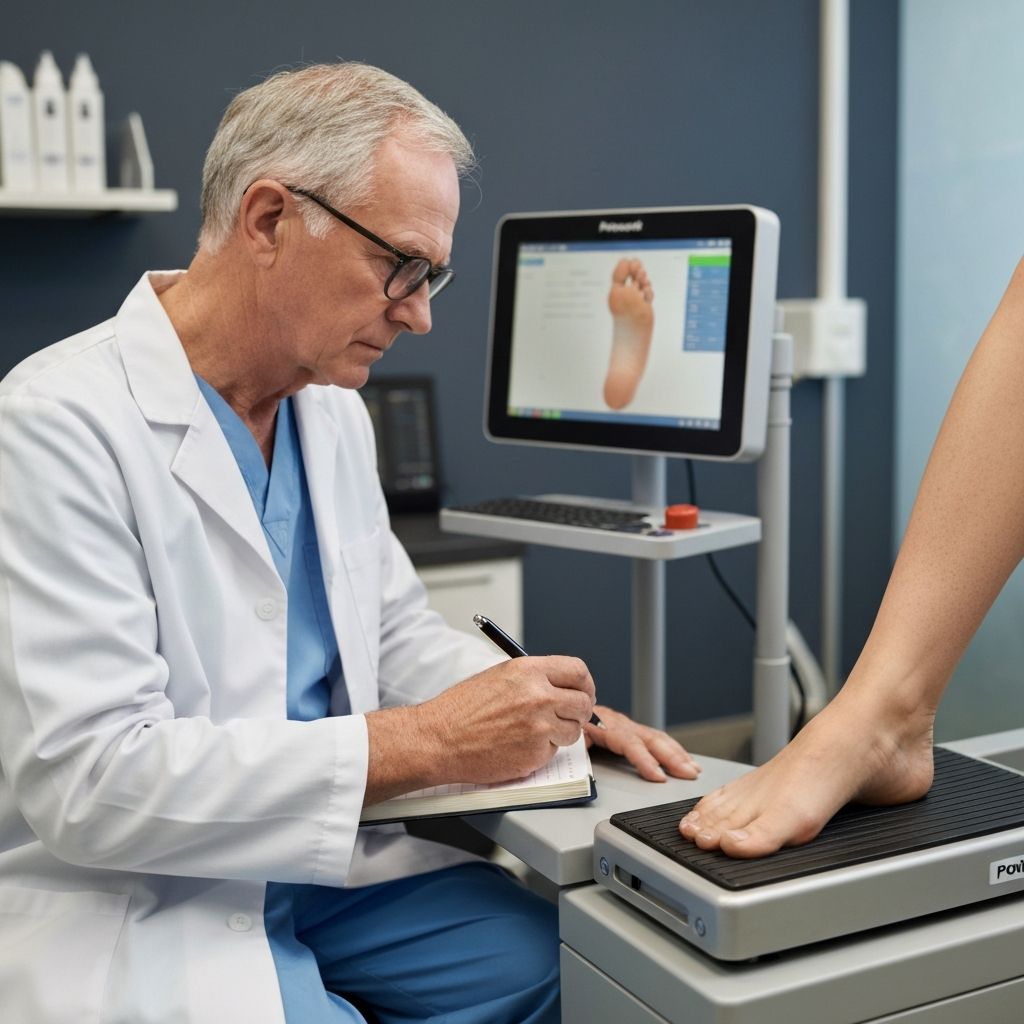
Your appointment includes a comprehensive assessment to diagnose the exact cause of your heel pain.
Full Clinical History
We discuss your symptoms, your activity level, your footwear and your daily routine to understand the full picture of your heel pain.
Comprehensive intakeGait Analysis
We analyse how you walk and identify loading problems contributing to heel pain. This reveals pronation patterns, foot strike issues and asymmetries.
Video analysisFoot Posture & Podoscope Assessment
We visually examine your arch height, heel alignment and pressure patterns using specialist podoscope equipment to see exactly where the heel is overloaded.
Pressure mappingJoint Range of Motion Testing
We assess your ankle mobility, calf tightness, hip movement and more. Stiffness or weakness anywhere in the chain can contribute to heel pain.
Mobility checksStrength & Flexibility Assessment
Weakness or tight muscles often contribute to chronic heel pain. We test your lower limb strength and flexibility systematically.
Functional testingClear Diagnosis
You'll know exactly: what condition you have, why it happened, what needs to change, and how long recovery will take. We always explain things in plain English.
No jargonTailored Rehabilitation Plan
Your heel pain treatment may include: calf stretches, strengthening exercises, plantar fascia loading, footwear guidance, activity modification, gait retraining, and custom orthotics if needed.
Personalised planOrthotics & Support
Orthotics and insoles for heel pain
For patients with biomechanical problems, orthotics can significantly reduce heel pain.
Off-the-shelf insoles
Good for mild cases or short-term support.
Custom-made 3D-printed orthotics
For long-standing or complex heel pain, we offer premium orthotics:
- 3D scan of your exact foot shape
- designed using your gait-analysis results
- 3D printed specifically for your weight, foot posture and condition
- durable for 10+ years
- transferable between different shoes
Custom orthotics can greatly reduce pressure on the heel and support long-term recovery.
Related Services
Other conditions we treat
Serving patients across Nottinghamshire
FAQs
Your Heel Pain Questions Answered
This is classic plantar fasciitis — the fascia tightens overnight while you sleep, then gets painfully stretched when you take your first steps. Morning heel pain is a strong diagnostic sign of plantar fasciitis.
Sometimes, but it often becomes chronic without treatment. When heel pain becomes long-standing, the healing process slows down and scar tissue can develop. This makes the condition more stubborn, more painful and much harder to treat. Early intervention with a biomechanical assessment gives you the best chance of fast, full recovery.
Not necessarily — we guide you on safe activity levels. Complete rest is rarely the answer. Controlled, progressive loading helps the tissues heal stronger and prevents long-term weakness. We'll show you how to stay active without making your heel pain worse.
No — only if your biomechanics genuinely need them. Your podiatrist will assess your foot posture, gait pattern and activity levels during the biomechanical assessment and recommend orthotics only if they are clinically appropriate for your case.
Many patients feel relief within a few weeks when following a proper plan. Full recovery typically takes 8–12 weeks depending on the cause, how long you've had heel pain, your biomechanics, activity levels, adherence to exercises and footwear. Our job is to give you the quickest, safest and most effective pathway to recovery.
Not always. Steroid injections can temporarily reduce inflammation, but they don't fix the underlying reason your heel is hurting. Most cases of heel pain improve with the right assessment, footwear changes, strengthening exercises and load management — without needing an injection. Many of our patients in Arnold and Nottingham recover fully using conservative, evidence-based treatments alone. However, if your assessment indicates that a steroid injection would be clinically beneficial, we do offer this treatment as part of your personalised care plan.
Steroid injections shouldn't be the first option for heel pain because they mainly mask symptoms rather than resolving the underlying cause. Although they may give short-term relief, the benefits often fade, and repeated injections can weaken the surrounding tissues. This can increase the risk of irritation, tissue thinning or small tears. If the heel pain has become chronic or there is scar tissue present, an injection on its own is unlikely to solve the problem. A thorough biomechanical assessment is much more effective, as it identifies the true source of your heel pain and allows us to create a targeted treatment plan that provides long-term improvement instead of temporary relief.
Plantar fasciitis is a specific diagnosis — it's inflammation or irritation of the plantar fascia tissue running along the bottom of your foot. General heel pain can be caused by plantar fasciitis, but also by many other conditions including Achilles tendinopathy, heel fat pad syndrome, nerve entrapment, stress fractures or heel bursitis. A biomechanical assessment identifies the exact cause so we can treat it properly.
Yes, absolutely. Tight calf muscles and limited ankle mobility increase tension through the Achilles tendon and plantar fascia, overloading the heel with every step. Calf stretching and strengthening are often a key part of effective heel pain treatment.
Heel pain often returns because the underlying biomechanical cause was never addressed. Simply resting, using ice or taking painkillers masks the symptoms temporarily but doesn't fix the root problem. If your foot posture, gait mechanics or footwear are still putting excessive strain on the heel, the pain will return. A biomechanical assessment identifies and corrects these issues to prevent recurrence.
Our clinic is in Arnold, Nottingham. We see patients from across Nottinghamshire including Gedling, Carlton, Mapperley, Woodthorpe, Ravenshead, Hucknall, Daybrook, Bestwood, Calverton, Lambley, Burton Joyce, West Bridgford, Beeston, Bingham, Radcliffe-on-Trent, Mansfield, Newark, Retford, Worksop and surrounding areas.
We are recognised as one of the leading podiatry and sports injury clinics in the UK for biomechanics and heel pain treatment. Our podiatrists combine advanced gait analysis, podoscope assessment and evidence-based treatment planning to diagnose the root cause of pain and improve long-term performance. We treat heel pain every single day — from runners to nurses, retail staff to office workers — and our patients consistently tell us we helped them when other treatments failed.
Ready to Get Rid of Your Heel Pain?
Book your biomechanical assessment today and get the expert diagnosis and treatment plan you need. Same-day and emergency appointments are available — call us or book online.