Knee Pain
Assessment & Treatment.
Knee pain is extremely common and can affect anyone — whether you're active, on your feet at work, recovering from injury, or simply struggling with day-to-day movement.
As one of the UK's leading podiatry and sports-injury clinics, we specialise in diagnosing and treating knee pain by identifying the root cause, which is often linked to foot posture, gait mechanics and lower-limb alignment.
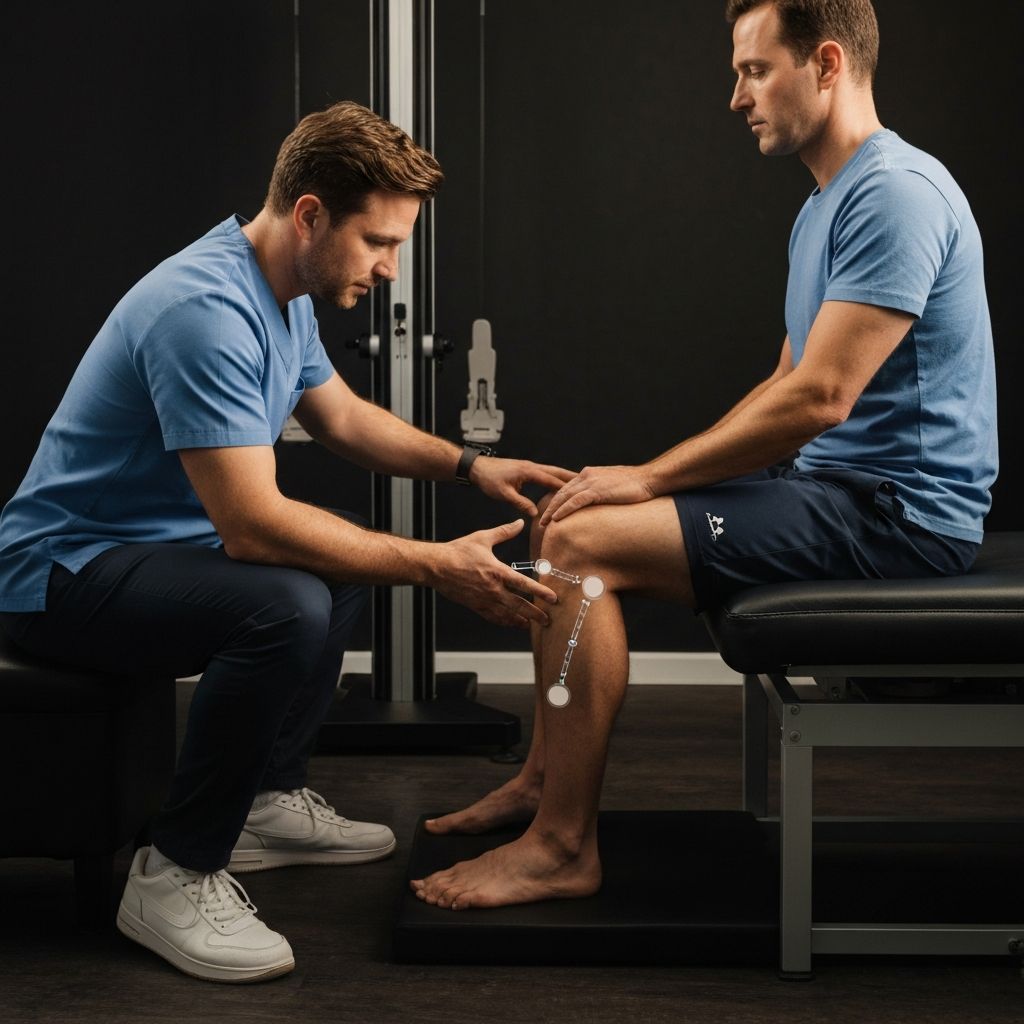
If you've searched for any of these, you're in the right place:
And this is exactly why patients book their knee pain assessment under our Biomechanical Assessment / Gait Analysis.
Understanding The Problem
Why does knee pain happen?
Knee pain rarely comes from the knee alone. The real cause is often lower down (the foot/ankle) or higher up (the hip/pelvis).
Overpronation (foot rolling in)
When the foot rolls inward excessively, it causes internal knee rotation and overloads the joint.
Flat feet or high arches
Poor foot posture affects lower limb alignment and increases stress on the knee.
Weak hip or glute muscles
Weakness causes poor knee control and tracking issues during walking and running.
Poor kneecap alignment
Patellofemoral tracking issues cause pain around or behind the kneecap.
Tight calves or hamstrings
Muscle tightness limits joint movement and increases strain through the knee.
Repetitive strain from walking/running
Overuse without proper biomechanics leads to chronic knee pain.
Old injuries causing compensation
Previous ankle, knee or hip injuries change gait patterns and overload the knee.
Incorrect or worn-out footwear
Unsupportive shoes contribute to poor foot mechanics and knee pain.
Reduced ankle or hip mobility
Stiffness elsewhere forces the knee to compensate and work harder.
Meniscus irritation
Cartilage problems can develop from biomechanical overload over time.
Patellofemoral pain syndrome (PFPS)
Runner's knee — pain around the kneecap from tracking and loading issues.
Iliotibial band (ITB) issues
Tightness or friction of the ITB causes pain on the outside of the knee.
Because knee pain is usually a biomechanical issue, our full-length assessment is the most accurate way to understand why it is happening.
Comprehensive 90-Minute Assessment
Why you should book knee pain under our Biomechanical Assessment / Gait Analysis
Our 1 hour 30 minute assessment is one of the most comprehensive in the UK.
Knee Alignment Analysis
We assess whether your knee tracks correctly during walking and movement — checking for valgus (knock-knee), varus (bow-leg), or patella tracking issues.
Foot Posture Assessment
Flat feet, high arches and overpronation often overload the knee joint. We use podoscope examination to see exactly how your foot posture affects your knees.
Gait Mechanics Evaluation
How your foot strikes the ground affects the forces sent up through your knee. We analyse your walking and running gait to identify loading problems.
Hip & Glute Function Testing
Weak or poorly-activated hip muscles are a major cause of knee pain. We test hip strength, stability and gluteal activation systematically.
Range of Motion Assessment
We assess ankle, knee and hip movement in depth — stiffness or restrictions anywhere in the chain can contribute to knee pain.
Strength & Flexibility Testing
Weakness or imbalances in key areas can cause knee compensation and pain. We test lower limb strength and flexibility systematically.
Footwear Impact Review
Your shoes may be contributing more than you realise. We assess cushioning, support, wear patterns and suitability for your foot type and activity.
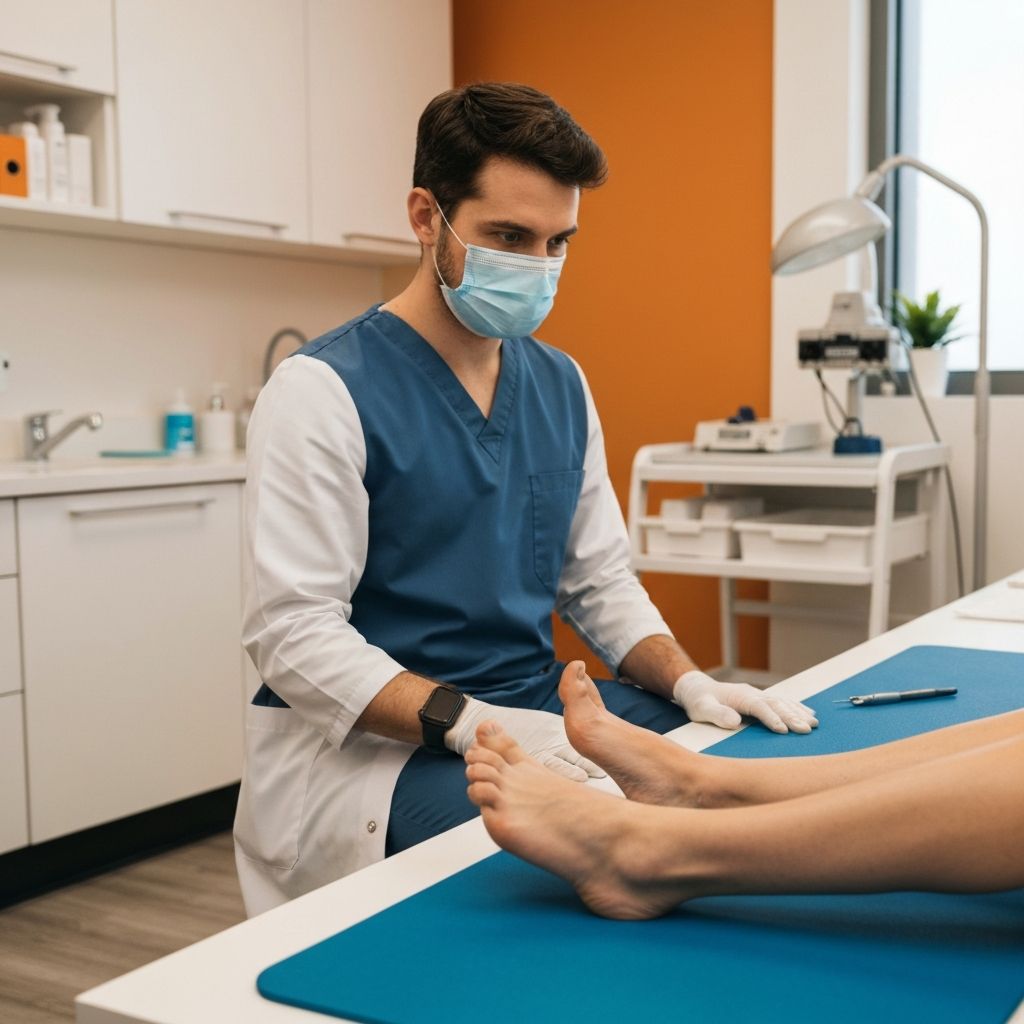
See how your feet affect your knees
The podoscope provides instant visual clarity on arch height, pressure distribution and overpronation.
Advanced Diagnostic Tool
Enhanced Podoscope examination — see how your feet may be causing your knee pain
As part of your knee pain evaluation, we use an advanced Podoscope — a glass, illuminated platform that shows the underside of your feet in real time.
The Podoscope reveals:
- arch height
- pressure distribution
- uneven weight-bearing
- heel alignment
- overpronation or supination
- imbalances that affect knee posture
Patients love the Podoscope because it provides instant visual clarity — you can see how your feet are contributing to your knee pain.
This builds trust, understanding, and confidence in your treatment plan. The Podoscope is a premium diagnostic tool used in leading UK clinics and significantly improves assessment accuracy for knee pain.
Evidence-Based Treatment
Knee pain treatment — tailored to your biomechanics
Your treatment plan may include:
Strengthening Programme
We target: glutes, quads, hamstrings, foot intrinsic muscles, ankle stabilisers. Stronger legs = better knee function.
Gait Retraining
Adjusting walking or running patterns can dramatically reduce knee pain.
Custom Orthotics or Insoles
If foot posture is causing your knee pain, orthotics may be recommended. Off-the-shelf for mild cases, or custom 3D-printed orthotics for complex biomechanics.
Stretching & Mobility Work
Improving flexibility in calves, hamstrings, quadriceps and hip flexors reduces joint stress.
Footwear Guidance
We advise on cushioning, stability, arch support, running shoes and walking/work shoes. The right footwear can instantly reduce knee pain.
Manual Therapy (if appropriate)
To improve joint mobility, reduce tightness and relieve soft-tissue overload.
Return-to-Sport Planning
We guide you safely back into walking, running, gym training and sport without aggravating your knee pain.
Related Services
Other biomechanical assessments & treatments
Serving patients across Nottinghamshire
FAQs
Your Knee Pain Questions Answered
Knee pain when walking is often due to poor foot posture, weak hip muscles, or gait abnormalities. When your foot rolls inward excessively (overpronation) or your hip muscles don't stabilise the leg properly, the knee joint is forced to compensate — leading to overload, poor tracking and pain. A biomechanical assessment identifies these issues and provides a targeted treatment plan.
Usually no — most knee pain is biomechanical and diagnosed clinically through physical assessment, gait analysis and functional testing. Scans are typically only needed if there's suspected structural damage (ligament tear, fracture, significant cartilage injury) or if conservative treatment hasn't worked. Your podiatrist will advise if imaging is necessary.
Orthotics can significantly help if foot mechanics are the root cause. By correcting overpronation, improving arch support and realigning the lower limb, custom orthotics reduce the abnormal forces travelling up to the knee. However, orthotics work best when combined with strengthening and gait retraining — it's rarely one solution alone.
Not always. Clicking or popping can be normal if it's painless and consistent. However, new clicking, painful clicking, or clicking with swelling may indicate tracking issues, cartilage irritation or meniscus problems. A biomechanical assessment can determine whether the clicking is a concern.
Not necessarily — we guide you on what's safe. Complete rest is rarely the best answer. Controlled, progressive loading helps tissues heal stronger and prevents long-term weakness. We'll show you how to modify your activity, strengthen the right muscles and gradually return to full training without making your knee pain worse.
Most patients notice a difference within a few weeks of starting the correct strengthening and biomechanical plan. Full recovery typically takes 8–12 weeks depending on the cause, severity, how long you've had knee pain, your activity levels and adherence to exercises. Our job is to give you the quickest, safest and most effective pathway to recovery.
Yes, absolutely. Flat feet often lead to overpronation (excessive inward rolling of the foot), which causes internal rotation of the shin bone and affects how the kneecap tracks. This creates abnormal stress on the knee joint and can lead to patellofemoral pain, ITB syndrome, or general knee overload. Addressing foot posture with orthotics and gait retraining often resolves knee pain.
PFPS, also called runner's knee, is pain around or behind the kneecap caused by poor tracking of the patella in its groove. It's usually related to weak hips, tight muscles, overpronation or training errors. PFPS responds very well to biomechanical treatment including strengthening, gait retraining and orthotics if needed.
Stair climbing increases the load on your kneecap significantly — up to 3–4 times your body weight. If you have weak quads, poor kneecap tracking, or biomechanical issues, stairs will aggravate the pain. Strengthening the quads and glutes, improving foot mechanics and addressing gait patterns usually helps dramatically.
Yes — weak hip and glute muscles are one of the most common causes of knee pain. When your hip muscles don't control the leg properly, the knee collapses inward during movement (dynamic valgus), causing poor alignment and overload. Hip strengthening is a core part of effective knee pain treatment.
Our clinic is in Arnold, Nottingham. We see patients from across Nottinghamshire including Gedling, Carlton, Mapperley, Woodthorpe, Ravenshead, Hucknall, Daybrook, Bestwood, Calverton, Lambley, Burton Joyce, West Bridgford, Beeston, Bingham, Radcliffe-on-Trent, Mansfield, Newark, Retford, Worksop and surrounding areas.
We are recognised as one of the leading podiatry and sports injury clinics in the UK for biomechanics and knee pain treatment. Our podiatrists combine advanced gait analysis, podoscope assessment, hip and glute testing and evidence-based treatment planning to diagnose the root cause of pain and improve long-term performance. We treat knee pain every single day — from runners to office workers, retail staff to gym-goers — and our patients consistently tell us we helped them when other treatments failed.
Ready to Solve Your Knee Pain?
Book a comprehensive biomechanical assessment at our Arnold clinic today. We'll identify the root cause and create a personalised treatment plan.