Flat Feet &
Overpronation Treatment.
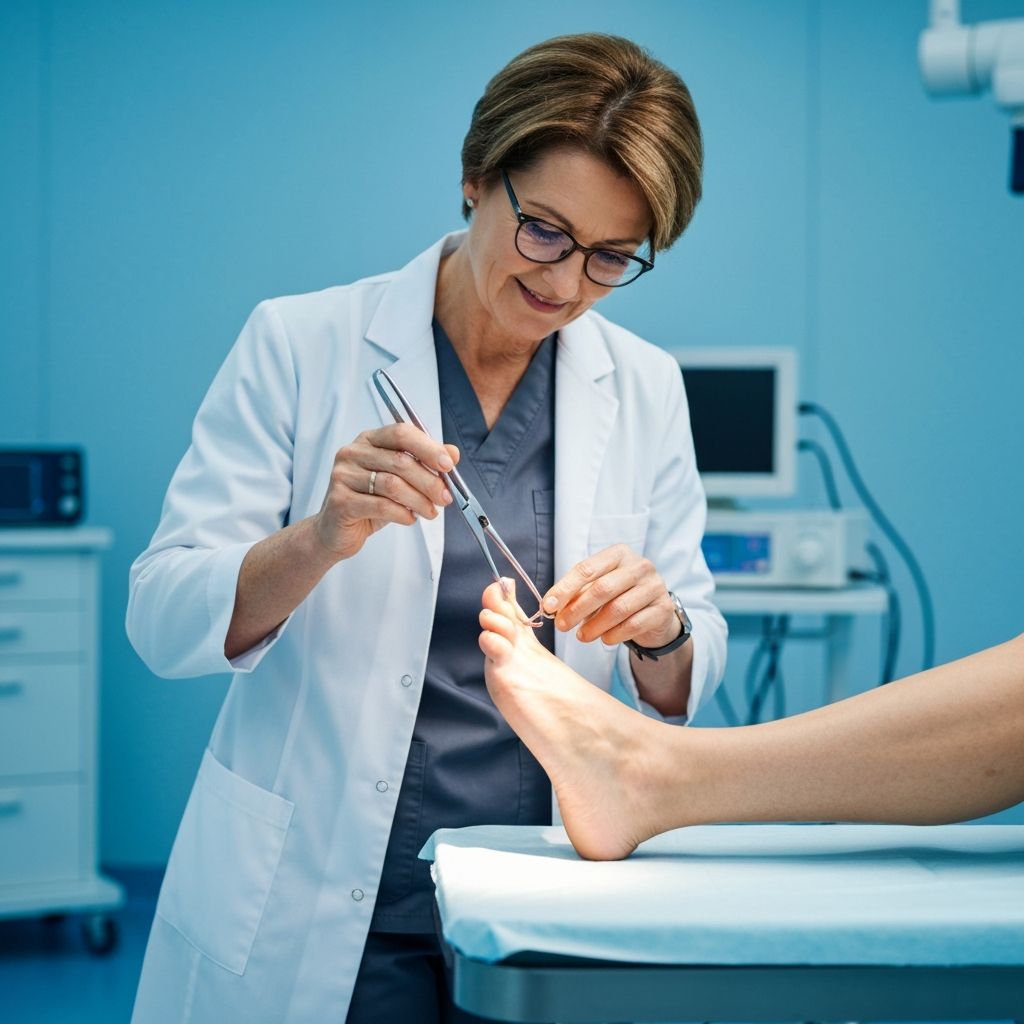
Flat feet (also called fallen arches or overpronation) is one of the most common biomechanical issues we treat — affecting foot, ankle, knee, hip and even back function.
As one of the UK's leading podiatry clinics for biomechanics, we specialise in diagnosing and treating flat feet using advanced gait analysis, podoscope examination, custom orthotics and evidence-based rehabilitation.
If you've searched for any of these, you're in the right place:
Common Signs & Symptoms
How do I know if I have flat feet?
Flat feet can cause a wide range of symptoms — not just foot pain. Many people don't realise their knee, hip or back pain is linked to their flat feet until they have a biomechanical assessment.
Visible arch collapse
Your arch touches or nearly touches the ground when standing. The medial (inner) arch is flat or collapsed.
Feet rolling inward when walking
Excessive inward rolling (overpronation) puts abnormal stress on joints and tendons.
Heel tilting inward
The back of your heel leans inward when standing (rearfoot valgus).
Foot or arch pain
Pain along the inside of the foot, arch fatigue, plantar fasciitis or general foot ache.
Knee or hip pain
Flat feet cause poor lower limb alignment leading to knee, hip or even back pain.
Tired or aching legs
Muscles work harder to compensate for poor foot mechanics, causing fatigue and discomfort.
Bunions or toe deformities
Flat feet increase forefoot stress and can lead to bunions, hammertoes or other structural changes.
Shoes wearing out unevenly
Inner edge of shoes wears down faster due to overpronation and poor gait mechanics.
Poor balance or instability
Reduced arch support affects proprioception and stability during walking or standing.
Comprehensive Assessment
What happens in your flat feet biomechanical assessment?
We don't just look at your feet — we assess your entire lower limb, gait mechanics, muscle function and footwear to identify the root cause and create a targeted treatment plan.
Arch Height & Posture Assessment
Arch classificationWe measure your arch height both sitting and standing to determine whether you have flexible flat feet (arches present when non-weightbearing) or rigid flat feet (no arch present at all).
Podoscope Examination
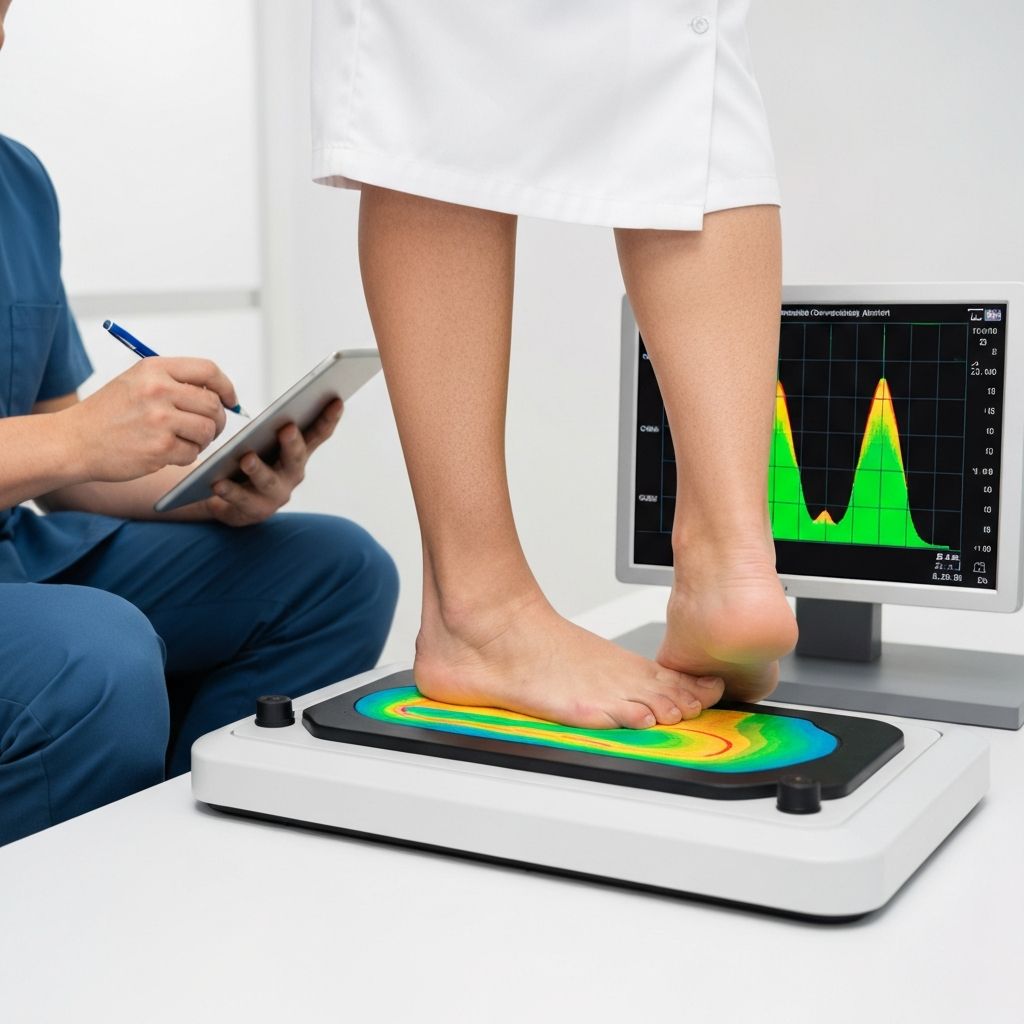
Visual pressure analysisUsing our clinical podoscope, we analyse the exact pressure distribution under your feet. This shows us visually how much arch collapse you have, which areas are overloaded, and how your foot contacts the ground.
Rearfoot & Forefoot Alignment
Structural analysisWe assess whether your heel is tilting inward (rearfoot valgus), how your forefoot is positioned relative to your heel, and whether there are any structural abnormalities affecting alignment.
Gait Mechanics Evaluation
Video gait analysisHow your foot strikes the ground and how much it rolls inward during the gait cycle affects everything above it. We use video gait analysis to identify overpronation and abnormal loading patterns.
Lower Limb Alignment Assessment
Full chain assessmentFlat feet affect knee tracking, hip rotation and even spinal alignment. We assess how your flat feet are impacting your entire lower limb and spine posture.
Strength & Flexibility Testing
Functional testingWe test foot intrinsic muscle strength, calf flexibility, hip stability and ankle mobility. Weakness or tightness in any of these areas worsens flat feet and overpronation.
Footwear Impact Review
Shoe analysisYour shoes may be making your flat feet worse. We assess cushioning, arch support, stability features, wear patterns and suitability for your foot type and activity level.
Evidence-Based Treatment
Your flat feet treatment plan
Treatment is tailored to your specific foot type, symptoms and goals. Most patients use a combination of the following approaches for optimal long-term results.
Foot Strengthening Exercises
We target: foot intrinsic muscles, tibialis posterior (key arch-supporting muscle), calf muscles, and ankle stabilisers. Stronger feet = better arch control.
Gait Retraining
Teaching you to walk with better foot mechanics can reduce overpronation and improve long-term foot function.
Custom Orthotics or Arch Support Insoles
For mild to moderate flat feet, we may recommend off-the-shelf orthotics with arch support. For severe overpronation, complex biomechanics or sport-specific needs, we prescribe custom 3D-printed orthotics tailored to your exact foot shape and movement pattern.
Stretching & Mobility Work
Improving flexibility in calves, Achilles tendon and plantar fascia reduces strain and improves foot mechanics.
Footwear Guidance
We advise on stability shoes, motion control features, arch support systems and appropriate footwear for work, sport and daily wear. The right footwear can make a dramatic difference.
Activity Modification
We guide you on how to manage activity levels, training load and return to sport safely without aggravating flat feet or causing overuse injuries.
Referral if Required
In rare cases of severe rigid flat feet or structural abnormalities not responding to conservative care, we may refer you to an orthopaedic specialist for surgical opinion.
Podoscope Analysis
See your flat feet in real-time
One of the most powerful tools we use is our clinical podoscope — a pressure plate that lets you see exactly how your foot contacts the ground and where your arch has collapsed.
- Shows arch collapse visually in real-time
- Identifies overpronation and pressure distribution
- Reveals which parts of your foot are overloaded
- Helps us design the perfect orthotic prescription
- Allows you to see the before-and-after improvement with orthotics
Related Services
You might also be interested in
Serving patients across Nottinghamshire
FAQs
Your Flat Feet Questions Answered
Flat feet can be genetic (you were born with them or they developed in childhood), acquired through injury, overuse, ageing, pregnancy, weight gain, or conditions like posterior tibial tendon dysfunction. Some people have flexible flat feet (arches appear when non-weightbearing) while others have rigid flat feet (no arch present at all). A biomechanical assessment determines the type and cause.
Not always — some people with flat feet have no pain or problems at all. However, flat feet often cause overpronation which can lead to plantar fasciitis, heel pain, knee pain, hip pain, Achilles tendinopathy, shin splints, bunions and general lower limb fatigue. If you have symptoms, treatment is recommended. Even if you're currently pain-free, addressing biomechanics can prevent future issues.
Yes, absolutely. Flat feet cause overpronation (excessive inward rolling), which creates internal rotation of the shin bone and affects how the kneecap tracks. This leads to abnormal stress on the knee joint and can cause patellofemoral pain, ITB syndrome, or general knee overload. Treating flat feet with orthotics and gait retraining often resolves knee pain.
Yes. Flat feet alter lower limb alignment, which affects pelvic tilt and spinal posture. This can lead to compensatory patterns that cause lower back pain, hip pain or postural issues. Correcting foot mechanics with orthotics and strengthening can reduce back pain significantly.
Orthotics don't permanently change your foot structure, but they can significantly improve foot function, reduce pain and prevent long-term complications. Custom orthotics support the arch, control overpronation and realign the lower limb. When combined with strengthening exercises, orthotics provide excellent long-term symptom relief and improved performance.
It depends on severity and your goals. Mild flat feet with minor symptoms may respond well to good-quality off-the-shelf arch support insoles. Moderate to severe overpronation, complex biomechanics, sport-specific needs, or cases not responding to off-the-shelf products usually require custom 3D-printed orthotics for optimal control and comfort. Your podiatrist will recommend the most appropriate option.
In children, flat feet may improve naturally with growth and development. In adults, flexible flat feet can be improved with strengthening exercises and orthotics, but rigid flat feet (bony structural issues) cannot be permanently corrected without surgery. Most adults don't need surgery — effective symptom management with orthotics, strengthening and gait retraining works extremely well.
Yes — strengthening the foot intrinsic muscles, tibialis posterior and ankle stabilisers can improve arch function and reduce overpronation, especially in flexible flat feet. Exercises alone may not fully correct severe flat feet, but they are a critical part of long-term management and work best when combined with orthotics and appropriate footwear.
Flat feet lack the natural shock-absorbing and spring mechanism of a healthy arch. This means muscles, tendons and ligaments have to work harder to support your body weight, leading to fatigue, strain and pain. Common pain sites include the arch, heel (plantar fasciitis), inside of the ankle (tibialis posterior tendinopathy) and forefoot.
Yes, absolutely. Many elite athletes have flat feet. The key is managing biomechanics properly with the right footwear, orthotics if needed, and a good strength and conditioning programme. We help runners, footballers, gym-goers and athletes of all levels optimise their flat feet for performance and injury prevention.
Our clinic is in Arnold, Nottingham. We see patients from across Nottinghamshire including Gedling, Carlton, Mapperley, Woodthorpe, Ravenshead, Hucknall, Daybrook, Bestwood, Calverton, Lambley, Burton Joyce, West Bridgford, Beeston, Bingham, Radcliffe-on-Trent, Mansfield, Newark, Retford, Worksop and surrounding areas.
We are recognised as one of the leading podiatry clinics in the UK for biomechanics and flat feet treatment. Our podiatrists combine advanced gait analysis, podoscope assessment, functional testing and evidence-based orthotic prescription to diagnose the root cause of pain and improve long-term foot function. We treat flat feet every single day — from children to elite athletes, office workers to manual labourers — and our patients consistently tell us we helped them when other treatments failed.
Ready to fix your flat feet?
Book a comprehensive biomechanical assessment at our Arnold clinic today. Same-day and emergency appointments available — call us or book online.