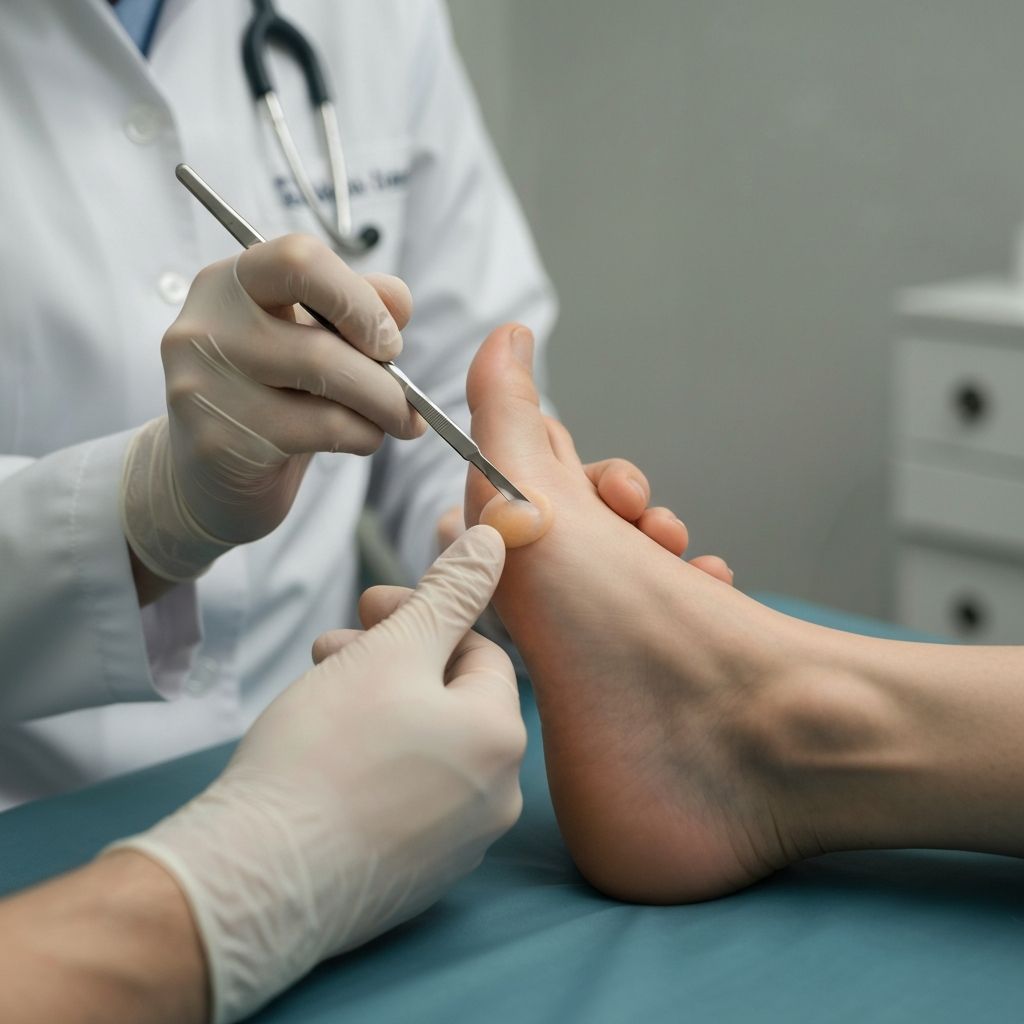
Corns & Calluses
Safe, Painless Removal — Immediate Relief in a Single Visit.
Corns and calluses are areas of thickened, hardened skin that develop in response to repeated pressure or friction. Corns typically form on the tops and sides of toes, while calluses develop on the soles of the feet — particularly under the ball and heel. Both can range from mildly uncomfortable to intensely painful.
Our podiatrists use specialist sterile scalpels to safely and painlessly remove corns and calluses in a single appointment. This is a skilled procedure — attempting to remove corns at home with blades or caustic corn plasters carries real risk of injury or infection, particularly for patients with diabetes or poor circulation.
We also identify and address the underlying cause — whether that is footwear, gait, or structural foot shape — to reduce the rate of recurrence. For persistent or quickly recurring corns and calluses, we may recommend orthotics or padding to redistribute pressure long-term.
What We Offer
- Scalpel debridement of corns & calluses
- Enucleation of deep-rooted corns
- Seed corn treatment
- Pressure-relief padding & offloading
- Footwear assessment & advice
- Custom orthotic referral if required
Corn removal by a podiatrist is completely painless — the overlying skin has no nerve endings. Most patients feel immediate relief the moment the corn is removed.
Full guide to corns & calluses treatment
In-depth information, FAQs & expert advice

Nail Cutting
Professional, Safe Nail Care — Especially for Thick or Difficult Nails.
Routine nail cutting is one of the most requested services at our clinic. Many patients — particularly older adults, those with reduced flexibility or dexterity, diabetic patients, and people with very thick or difficult nails — find it uncomfortable or even impossible to manage their own nail care safely.
Our podiatrists use specialist nail nippers, files, and drills to cut, thin, and tidy even the thickest and most misshapen nails. We also identify and address any associated concerns — such as early-stage ingrown nails, fungal changes, or skin conditions — during the appointment.
Regular professional nail care prevents problems before they develop: avoiding painful nail edges, pressure lesions, and the risk of infection that poorly managed nails can cause.
What We Offer
- Routine nail cutting & filing
- Thick nail reduction using nail drill
- Nail edge smoothing & shaping
- Early ingrown nail management
- Fungal nail identification & advice
- Nail & skin assessment
We recommend routine nail appointments every 6–12 weeks for patients with thick, difficult, or rapidly growing nails, and every 8–10 weeks for diabetic patients as part of their foot health routine.
Full guide to nail cutting & care
In-depth information, FAQs & expert advice

Diabetic Foot Care
Specialist Monitoring & Care to Protect Your Feet for Life.
Diabetes can significantly affect the health of your feet in two key ways: peripheral neuropathy (reduced or absent sensation) and peripheral arterial disease (reduced blood flow). Together, these complications mean that even a small cut, blister, or corn can develop into a serious ulcer or infection — sometimes with life-changing consequences if not managed correctly.
At General Foot Care, our HCPC-registered podiatrists are experienced in diabetic foot assessment and management. Each appointment includes a thorough assessment of circulation and sensation, identification of at-risk areas, and appropriate treatment — whether that is corn or callus removal, nail care, wound management, or onward referral.
Regular podiatry is not a luxury for diabetic patients — it is an essential part of managing the condition. Current NHS guidelines recommend that all diabetic patients have their feet checked at least annually, and more frequently if any risk factors are identified.
What We Offer
- Comprehensive diabetic foot assessment
- Doppler circulation assessment
- Monofilament neurological testing
- Safe corn & callus removal
- Wound & ulcer management
- Onward referral to diabetic foot team
If you have diabetes and have not had a foot check in the past 12 months — or if you have noticed any change in sensation, skin colour, or temperature in your feet — please do not delay in booking an assessment.
Full guide to diabetic foot care
In-depth information, FAQs & expert advice
FAQs
Your Foot Care Questions Answered
No referral is needed. You can book directly with us by phone or online. We see patients of all ages and for any foot concern — from a single corn to regular ongoing diabetic foot monitoring.
No. Corn removal by a podiatrist is completely painless. The thickened skin overlying a corn contains no live nerve endings, so scalpel debridement causes no discomfort whatsoever. Most patients are surprised at how quick and painless the procedure is.
This depends on the individual. For most people with thick or difficult nails, every 6–10 weeks is appropriate. For diabetic patients, we typically recommend 8–10 weeks. Your podiatrist will advise you on a suitable interval based on your nail condition.
We strongly advise against using corn plasters (salicylic acid plasters) at home, particularly for diabetic patients, elderly patients, or anyone with circulatory problems. These products can damage the healthy surrounding skin and lead to infection. Professional removal by a podiatrist is much safer, faster, and more effective.
Corns and calluses recur because the underlying cause — pressure and friction — has not been addressed. Your podiatrist will assess your footwear, gait, and foot shape to identify why they are forming. Padding, orthotics, or footwear changes can significantly reduce the rate of recurrence.
At minimum, once per year — but often more frequently depending on your level of risk. Patients with peripheral neuropathy, circulatory problems, a history of foot ulcers, or active foot changes should be seen every 3–6 months. Your podiatrist will recommend an appropriate review schedule.
A thorough diabetic foot assessment includes: checking circulation (using a Doppler probe or similar), testing sensation (using a 10g monofilament), inspecting skin and nails for changes, identifying any pressure areas or deformities, and documenting your risk category. We will then advise on appropriate treatment and monitoring frequency.
We can assess and provide initial wound management for diabetic foot ulcers. Where required, we will refer you promptly to the NHS diabetic foot team or your GP for specialist wound care. Early referral is critical — do not leave an open wound untreated.
NHS podiatry is increasingly restricted to high-risk patients (typically diabetic patients, those with serious circulatory conditions, or patients following foot surgery). Many patients with routine foot care needs — corns, calluses, nail cutting — now access podiatry privately. We offer straightforward, affordable private appointments with no waiting lists.
Yes. We offer mobile podiatry home visits across Nottinghamshire for patients who are unable to travel to the clinic — including elderly patients, those recovering from surgery, care home residents, and housebound individuals. Please visit our Home Visits page or call us to arrange.
Our clinic is based in Arnold, Nottingham and we serve patients from across Nottinghamshire including Gedling, Carlton, Mapperley, Woodthorpe, Ravenshead, Hucknall, Daybrook, Bestwood, Calverton, Lambley, Burton Joyce, Lowdham, and surrounding areas.
Absolutely. Thickened nails (onychogryphosis) are one of the most common conditions we treat — particularly in older patients. We use specialist rotary instruments to safely and comfortably reduce and reshape even the most severely thickened nails. You do not need to put up with painful or difficult nails.
Ready to Take Care of Your Feet?
Book a foot care appointment at our Arnold clinic today. Same-day and emergency appointments are available — call us or book online.