Gait Analysis &
Video Assessment.
Video gait analysis is the gold standard for diagnosing walking and running biomechanics — identifying overpronation, foot strike issues, asymmetries and movement inefficiencies that cause pain or limit performance.
As one of the UK's leading podiatry clinics for biomechanics, we use advanced video gait analysis, pressure mapping and functional testing to diagnose the root cause of your pain and optimise your movement.
Most people find us after searching:
- "gait analysis near me"
- "video gait analysis for runners"
- "why do my knees hurt when I run"
- "overpronation analysis Nottingham"
- "running gait assessment"
- "how do I improve my running form"
If any of these brought you here, you're in the right place.
Why Gait Analysis
What can gait analysis tell you?
Video gait analysis reveals movement patterns you cannot see or feel — identifying the root cause of pain and inefficiency.
Video slow-motion analysis
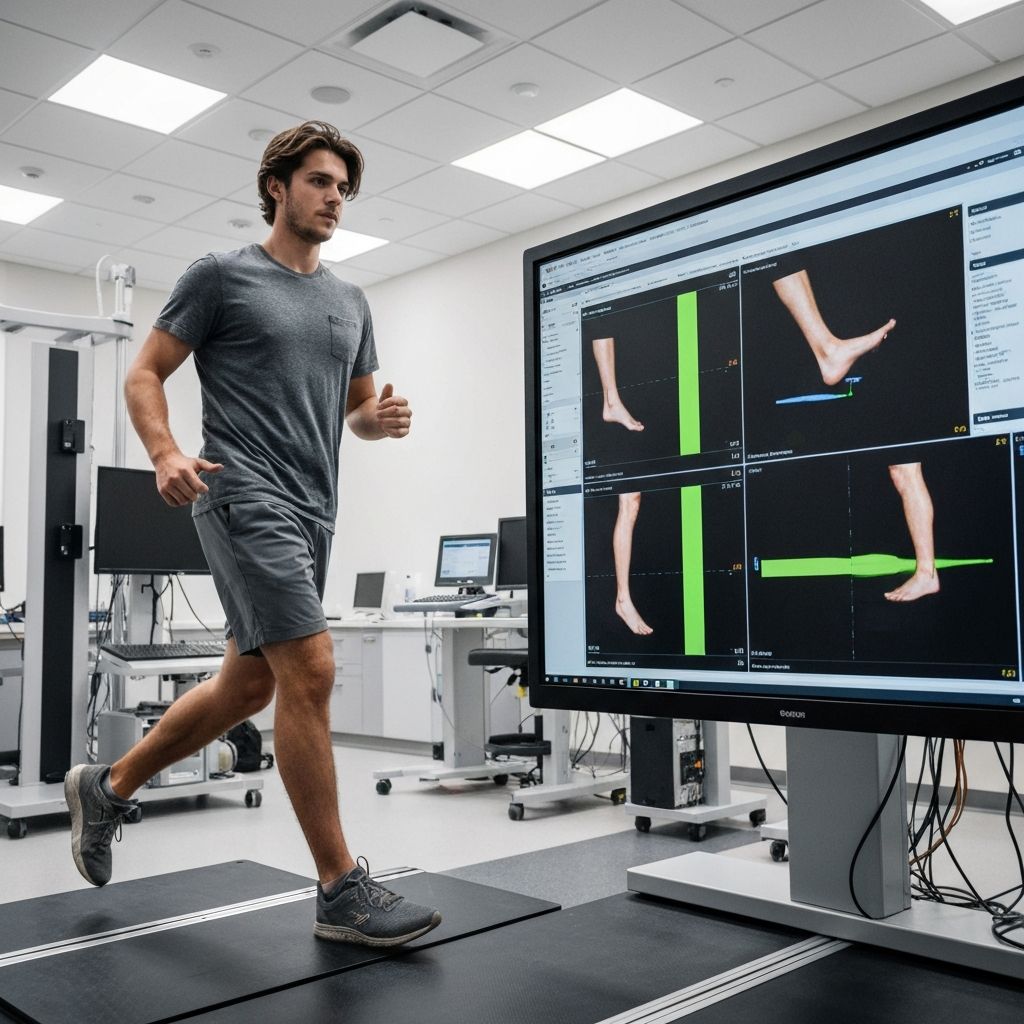
We record your walking or running gait from multiple angles and play it back in slow motion so you can see exactly what's happening at each phase of the gait cycle.
Identify overpronation or supination
Most foot and lower limb pain is caused by excessive inward rolling (overpronation) or outward rolling (supination). Gait analysis shows us the degree and timing of these movements.
Foot strike pattern assessment
We assess whether you're a heel striker, midfoot striker or forefoot striker — and whether your strike pattern is contributing to pain or injury.
Left vs right asymmetry
Many people walk or run differently on one side. Gait analysis identifies asymmetries that cause overload, compensation and injury.
Pressure distribution mapping
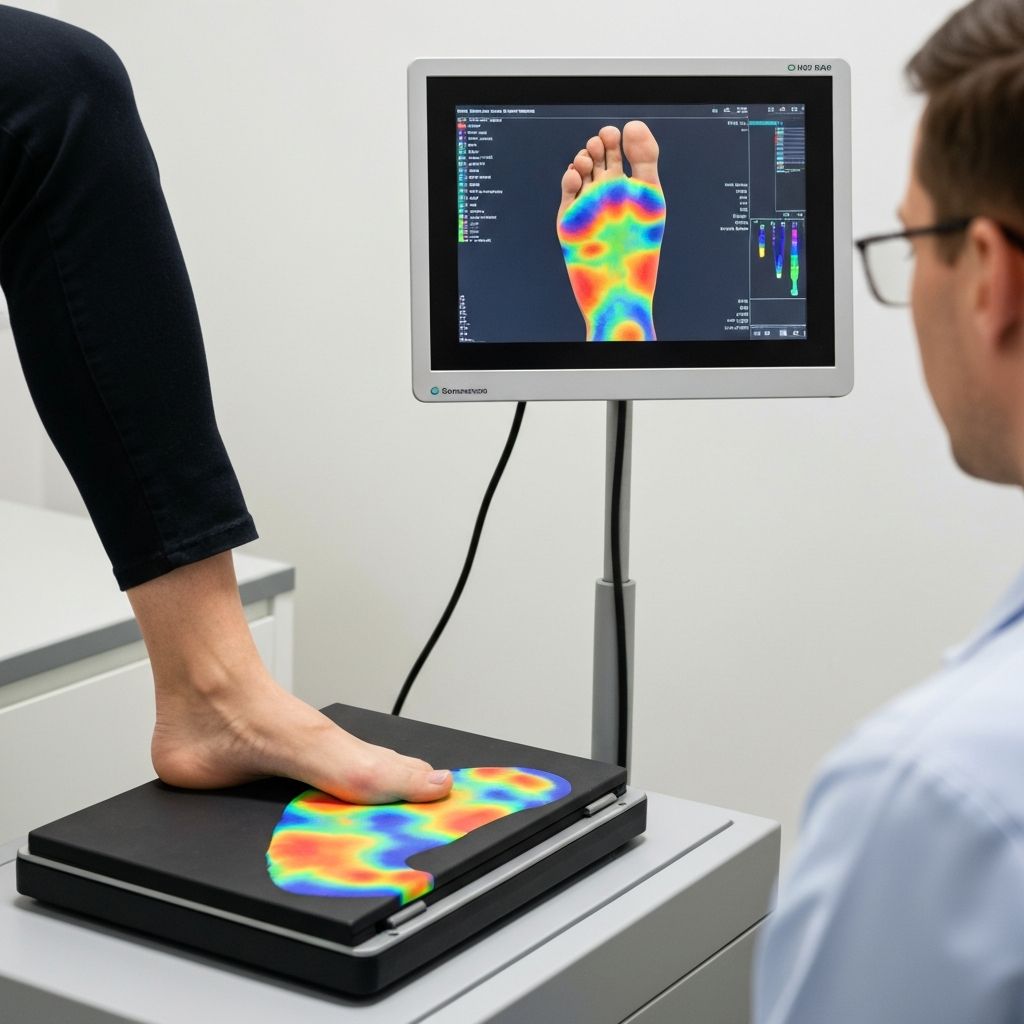
Using our podoscope or pressure plate, we see exactly which parts of your foot are taking excessive load — revealing where injuries are likely to develop.
Specialist running analysis
For runners, we assess stride length, cadence, ground contact time, vertical oscillation and running economy — all critical for performance and injury prevention.
Evidence-based orthotic prescription
Gait analysis allows us to prescribe custom orthotics with precision — tailored to your exact movement pattern, not guesswork.
Improve performance and efficiency
Optimising gait mechanics reduces energy waste, improves speed and endurance, and helps you move more efficiently whether walking, running or playing sport.
Full Biomechanical Assessment
What we assess during your gait analysis appointment
Our gait analysis is comprehensive — we assess posture, alignment, movement quality, muscle function and footwear to diagnose the root cause.
Static Posture & Alignment
Postural assessmentWe start by assessing your posture, spinal alignment, pelvic tilt, leg length and foot position while you're standing still. This gives us a baseline before we watch you move.
Walking Gait Analysis (Dynamic Assessment)
Multi-angle video captureYou walk barefoot on our treadmill or across the clinic floor while we record you from the front, side and rear. We analyse foot strike, heel contact, midstance, toe-off, arm swing, hip drop and trunk rotation.
Running Gait Analysis (For Runners)
Running biomechanicsIf you're a runner or athlete, we record you running at your normal pace. We assess cadence (steps per minute), stride length, ground contact time, overstride, vertical oscillation and running form efficiency.
Slow-Motion Video Playback
Visual feedbackWe play back your gait in ultra-slow motion so you can see exactly what your feet, ankles, knees and hips are doing at each phase of the gait cycle. Most patients are shocked to see their overpronation or asymmetry for the first time.
Podoscope Pressure Mapping
Real-time pressure analysisWe use a clinical podoscope (illuminated pressure plate) to show you the exact pressure distribution under your feet during stance and gait. High-pressure areas show up as bright spots — revealing where injuries are likely to develop.
Joint Range of Motion & Flexibility Testing
Functional mobility testingWe assess ankle dorsiflexion, subtalar joint motion, first ray mobility, hip rotation and hamstring/calf flexibility. Restricted or excessive motion in any of these areas affects gait mechanics.
Muscle Strength & Stability Assessment
Strength screeningWeak glutes, hip abductors, calf muscles or foot intrinsics affect gait control. We test key muscle groups to identify weakness that contributes to poor gait mechanics or injury.
Footwear & Orthotic Suitability Analysis
Footwear reviewWe assess your current shoes — checking cushioning, stability, heel drop, wear patterns and suitability for your foot type and activity. If you already have orthotics, we assess whether they're working correctly.
Evidence-Based Treatment
How we treat gait and biomechanical issues
Your gait analysis findings guide a personalised treatment plan to reduce pain, prevent injury and improve performance.
Gait Retraining & Technique Coaching
We teach you how to walk or run with better mechanics — reducing overpronation, improving foot strike, increasing cadence, reducing overstride and optimising posture. Small changes make a huge difference.
Custom Orthotics (If Required)
Based on your gait analysis findings, we may prescribe custom 3D-printed orthotics to control overpronation, redistribute pressure and realign your lower limb during movement.
Strengthening & Stability Programme
We prescribe targeted exercises to strengthen glutes, hip stabilisers, calf muscles and foot intrinsics — improving gait control and reducing injury risk.
Flexibility & Mobility Work
Stretching tight calves, Achilles, hamstrings and hip flexors improves gait mechanics and reduces compensatory movement patterns.
Footwear Prescription
We recommend the best shoes for your foot type, gait pattern and activity — whether that's neutral cushioned shoes, stability trainers, minimalist shoes or racing flats for runners.
Training Load Management (For Athletes)
We guide you on how to build mileage safely, manage training intensity and return to sport without overloading tissues and causing injury.
Follow-Up Gait Re-Assessment
After 8–12 weeks of treatment, we repeat your gait analysis to objectively measure improvement and refine your treatment plan if needed.
Podoscope Pressure Mapping
See your foot pressure in real-time
Our clinical podoscope uses illuminated glass to show you exactly where pressure is concentrated under your feet during walking and running. High-pressure areas show up as bright spots — revealing overpronation, supination, forefoot overload and areas at risk of injury.
- Visualise overpronation and arch collapse in real-time
- Identify forefoot overload and metatarsal stress
- See heel strike patterns and pressure distribution
- Compare left vs right asymmetries
- Demonstrate orthotic effectiveness before and after
- Show you exactly why you're getting pain where you are
Serving patients across Nottinghamshire
FAQs
Your Gait Analysis Questions Answered
Gait analysis is a detailed biomechanical assessment of how you walk or run. We use video recording, slow-motion playback, pressure mapping and functional testing to identify abnormal movement patterns, overpronation, foot strike issues, asymmetries and inefficiencies that cause pain or limit performance.
Gait analysis is ideal for: runners with recurring injuries (shin splints, knee pain, plantar fasciitis, Achilles pain), anyone with unexplained foot, ankle, knee, hip or back pain when walking or running, people with flat feet or overpronation, athletes wanting to improve performance, individuals preparing for a marathon or long-distance event, or anyone wanting to understand their biomechanics better.
No. Gait analysis is for anyone who walks or runs. We assess walking gait for patients with arthritis, diabetic foot problems, neurological conditions, post-surgery rehabilitation, chronic pain or simply poor walking mechanics. Running gait analysis is for runners and athletes.
Bring: your current running or walking shoes (we want to see the wear patterns), any orthotics or insoles you currently use, comfortable clothing you can move in (shorts or leggings are ideal so we can see your knees and ankles clearly), and a list of any pain, injuries or concerns you want us to address.
A full biomechanical assessment with gait analysis typically takes 60–90 minutes. This includes static assessment, video gait recording, slow-motion playback and analysis, pressure mapping, joint and muscle testing, footwear review, diagnosis, treatment plan and recommendations.
Yes. We provide you with a copy of your gait analysis video so you can see your movement patterns and track your progress over time.
Yes. Gait analysis identifies biomechanical risk factors before they cause injury — overpronation, weak glutes, tight calves, poor foot strike, asymmetries, overstriding. Addressing these issues through gait retraining, strengthening, orthotics and footwear changes significantly reduces injury risk.
It can. Optimising gait mechanics improves running economy (energy efficiency), reduces ground contact time, improves stride efficiency and reduces wasted motion. Many runners see performance improvements after addressing biomechanical inefficiencies — but injury prevention and pain relief are the primary goals.
Not always. Many people improve with gait retraining, strengthening and better footwear alone. Custom orthotics are prescribed only when overpronation, foot structure or biomechanics require additional control and support. Your podiatrist will recommend what's best for you based on your gait analysis findings.
Yes. Many cases of knee pain (patellofemoral pain, ITB syndrome, medial knee pain) are caused by poor foot mechanics — overpronation, foot strike issues or hip weakness. Gait analysis identifies the root cause and we treat it with orthotics, strengthening, gait retraining and footwear changes.
Our clinic is in Arnold, Nottingham. We see patients from across Nottinghamshire including Gedling, Carlton, Mapperley, Woodthorpe, Ravenshead, Hucknall, Daybrook, Bestwood, Calverton, Lambley, Burton Joyce, West Bridgford, Beeston, Bingham, Radcliffe-on-Trent, Mansfield, Newark, Retford, Worksop and surrounding areas.
We are recognised as one of the leading podiatry clinics in the UK for biomechanics and gait analysis. We combine video gait analysis, pressure mapping, functional testing and evidence-based treatment to diagnose the root cause of pain and improve movement quality. Our podiatrists work with recreational runners, elite athletes, triathletes, office workers and patients with chronic pain — and our patients consistently tell us we helped them when other clinics or physios couldn't.
Ready to Optimise Your Movement?
Book a comprehensive gait analysis and biomechanical assessment at our Arnold clinic today. Same-day and emergency appointments available — call us or book online.